
Prainha Beach Rio: The Complete Surfer’s Paradise Guide
🇧🇷 POR | 🇫🇷 FR | 🇺🇸 EN | 🇪🇸 ES Prainha Beach is tucked away between Recreio dos Bandeirantes and Grumari in Rio’s West Zone, and it’s considered one of the few urban beaches in the world with a Blue Flag certification — the international seal of environmental quality renewed for the 2024/2025 season. The easiest way to get there is by car or ride-share app (about 48 km from downtown, roughly 1h to 1h30 in normal traffic); if you’re taking public transport, hop on the BRT Transoeste to Recreio Shopping and then a van to the end of the line. Entry to the Prainha Municipal Natural Park is free, and the few kiosks charge around R$ 20 to R$ 40 for a light meal (approximate 2025 prices — confirm on-site before you go). But it’s in the details — the wave that breaks only here, the trail that climbs the rocky headland, the absence of any building in whatever angle you photograph — that Prainha sets itself apart from everything you’ve ever seen in Rio. Aerial view of Prainha, in Rio de Janeiro’s West Zone. | Photo: klimaplay1 / Pixabay What you’ll find in this guide How to get to Prainha Best time, best hour, and how long to stay What to see and do at Prainha The surfers’ beach: why Prainha is different Prainha Municipal Natural Park What to combine on the same day Where to eat nearby Practical tips and our take Frequently asked questions How to get to Prainha “Can you go without a car?” You can — but it takes patience and planning. By car or ride-share app is the most comfortable option. Leaving from Barra da Tijuca, head along Avenida das Américas toward Recreio, pass Recreio Shopping, continue on Estrada dos Bandeirantes and then Estrada da Prainha, which winds along the headland to the parking lot. The total distance from downtown is about 48 km; allow 1h to 1h30 depending on the time of day. Parking inside the Natural Park is paid (prices subject to change — check with Rio’s City Hall before you go) and spaces are limited. On sunny summer days or holidays, the Municipal Guard closes access when capacity is reached, so arrive before 9 am to guarantee entry. By app (Uber, 99), the ride from Barra runs around R$ 30 to R$ 50. By public transport — take the BRT Transoeste from Terminal Alvorada (Barra da Tijuca) or any station along the line to the Recreio Shopping stop. From there, vans and alternative buses run along Estrada dos Bandeirantes to Prainha — ask the drivers about the destination, as routes vary. The full trip to the beach gate takes between 1h30 and 2h from downtown. By subway, the line doesn’t reach the West Zone. The closest connection point is General Osório Station (Ipanema/Line 1), from where you catch a bus to Barra da Tijuca and then the BRT. By taxi or app from the South Zone: the ride from Leblon runs around R$ 60 to R$ 90 (2025 estimate — confirm on the app). It’s worth combining a ride-share there and a van back to save money. Best time, best hour, and how long to stay Prainha works year-round, but the experience changes a lot depending on when you go. Summer (December to March) — bigger waves, guaranteed sun, and the beach is more crowded. If you want to surf or watch amateur competitions, this is the period. The downside: car access can be blocked on peak days, and the headland trail gets packed on weekends. Fall and winter (April to August) — the beach is quieter, the sea calmer on some days, and Rio has mild winters (averages of 22°C). The afternoon light hits the rocks of the headland differently, and anyone taking photos will come away with images that are quite distinct from summer shots. Regardless of the season, arrive before 9 am. After 11 am on weekends and holidays, the parking lot is already full and access to the beach gets congested. If you get there early, you’ll have the sea almost to yourself for the first hour. As for time: set aside a full day. The combination of beach, headland trail (round trip in 40 minutes), and lunch at the kiosk fills the day easily. If you’re combining it with Grumari, two days are ideal — or one day leaving very early. What to see and do at Prainha Prainha is about 700 meters long and flanked by hills covered in Atlantic Forest. There are no buildings, no condos, no newsstands. What you see — from any point on the sand — is sea, rock, and vegetation. That’s not tourist hype: it’s the reason the Ministry of the Environment protects the area within the Municipal Natural Park. Besides swimming (with caution — currents can be strong), you can: North headland trail: a short climb over the rocks to a lookout with a view of the entire cove. On clear days you can see the profile of Grumari on the other side. Wear sneakers — flip-flops slip on wet rock. Watch the surf: even non-surfers stand and watch. The wave breaks consistently and allows maneuvers that other Rio beaches don’t offer. Photograph the sunset: the sun sets on the left side of the beach, painting the hills orange — unlike any sunset in Copacabana or Ipanema. The surfers’ beach: why Prainha is different Prainha attracts surfers from all over the state because of the consistent shape of its waves. | Photo: Fabricio_Macedo_Photo / Pixabay Rio’s surfers know what Prainha is, just like climbers know what Corcovado is. The beach receives south swells that, when they hit the rocky bottom of the cove, gain shape and power. The result is a wave that can reach 2 meters on strong swell days, with good sections for cutbacks and aerials. The annual Prainha surf competition draws athletes from all over the state. If you go during a competition, you’ll find sponsor tents, live broadcasts,
CCBB Rio de Janeiro: Complete Guide to Free Exhibitions and Cultural Programming

🇧🇷 POR | 🇫🇷 FR | 🇺🇸 EN | 🇪🇸 ES The Centro Cultural Banco do Brasil sits in Rio’s historic heart at Rua Primeiro de Março, 66, and is open Wednesday through Monday from 9 AM to 8 PM — with free entry to all exhibitions. Inside, what you find is nothing like what the street suggests: marble floors, ornate columns, a rotunda with a dome that once served as the trading floor for the Public Funds Exchange, and walls that now house works by artists from around the world. If you’re in downtown Rio for a day and don’t step inside, you’ll miss one of the most complete free attractions in the city. The CCBB occupies a neoclassical building from the early 20th century, listed as a historic landmark. | Photo: larahcv / Pixabay What You’ll Find in This Guide A Building That Holds Over a Century of History What You’ll Find in the CCBB Program How to Get to CCBB Rio Best Time to Visit and How Long to Stay What to Combine on the Same Day Where to Eat Near CCBB Practical Tips Before You Visit Is It Worth It? — Who the CCBB Is For Frequently Asked Questions A Building That Holds Over a Century of History The building on Rua Primeiro de Março wasn’t built to be a cultural center. In 1906, it was the headquarters of the Rio de Janeiro Commercial Association — a temple of commerce and finance, designed with the solemnity of those who wanted to impress. In 1920, Banco do Brasil took over the space, and those marble rooms saw lines of bank customers for decades. The central rotunda, with its imposing dome, once hosted the trading floor of the Public Funds Exchange. Imagine the noise of shouted negotiations under that dome — and compare it to the contemplative silence of an art gallery today. The transformation began in the late 1980s, when Banco do Brasil decided to preserve the building by converting it into a cultural center. The renovation kept the Ionic columns, the original marble, and the rotunda’s dome, and the CCBB opened its doors in 1989. Since then, the space has counted over 58 million visits and more than 2,450 projects in visual arts, film, theater, dance, music, and debate of ideas. That’s no small number for a place that has never charged admission. What You’ll Find in the CCBB Program The CCBB’s program changes frequently, and that’s exactly what makes it worth checking the official website before each visit. But the format is stable enough for you to know what to expect. Visual arts exhibitions usually occupy the upper floors of the CCBB, with high-level curation. | Photo: ShuaiGuo / Pixabay Visual Arts Visual arts exhibitions are the main draw. The CCBB brings retrospectives of renowned artists and thematic shows of international reach — the kind of curation that, in other contexts, would charge dozens of reais for admission. The space on the upper floors has been adapted to host large-scale installations, and the lighting in the rooms is careful enough for you to feel the difference. Check the current schedule at ccbb.com.br/rio-de-janeiro/programacao. Cinema The CCBB maintains a regular film program, with thematic cycles, retrospectives, and screenings of movies that rarely make it to the commercial circuit. Tickets for film sessions have a symbolic price, and in some cycles, they are also free — worth checking beforehand. Theater, Dance, and Music Dance and theater performances are part of the regular program at CCBB Rio. | Photo: romanen / Pixabay The CCBB theater hosts dance performances, plays, and concerts with surprising regularity. The space is smaller and more intimate than the city’s big theaters, which can be an advantage — you’re close to the stage and the performance. To guarantee a seat, buy tickets in advance online or in person at the box office. Educational Activities For those going with kids or wanting to deepen their visit, the CCBB offers guided tours and cultural education activities, usually linked to the exhibitions on display. Scheduling is typically done directly with the space — call (21) 3808-2300 or check the website. How to Get to CCBB Rio The CCBB is in Rio’s Historic Center, well-served by metro, buses, and ferries. | Photo: heibe / Pixabay The address is Rua Primeiro de Março, 66, Centro. The location is one of the most accessible in Rio — the downtown area is the convergence point for practically all of the city’s transportation. By Metro The most practical way is the metro. The nearest station is Uruguaiana — check the MetrôRio app for the line and operating hours, as times vary by day of the week. From the station exit to the CCBB’s door, it’s just a few minutes on foot through the historic center. By Bus Dozens of bus lines pass through the downtown area and the Praça XV region, which is just a few meters from the CCBB. If you’re coming from Copacabana, Ipanema, or Barra, look for buses heading to the city center — the closest stop to the CCBB is on Rua Primeiro de Março itself or on parallel streets. By Ferry Those coming from Niterói on the Praça XV ferry disembark less than 200 meters from the CCBB. It’s literally the most scenic way to arrive: you cross Guanabara Bay with the city ahead of you and step off right in the historic heart of downtown. By Taxi or Ride-Share A taxi or Uber from Copacabana to the CCBB costs between R$ 30 and R$ 50, depending on the time and traffic. During peak hours downtown, the metro is much faster. By Car Coming by car isn’t the best idea. Parking in the downtown area is expensive, and traffic can be chaotic on weekdays. If you do drive, prefer weekend mornings. Best Time to Visit and How Long to Stay The CCBB is open Wednesday through Monday, from 9 AM to 8 PM. It’s closed on Tuesdays — don’t forget that before heading
The Niemeyer Way in Niterói: A Self-Guided Tour of Oscar Niemeyer’s Masterpieces
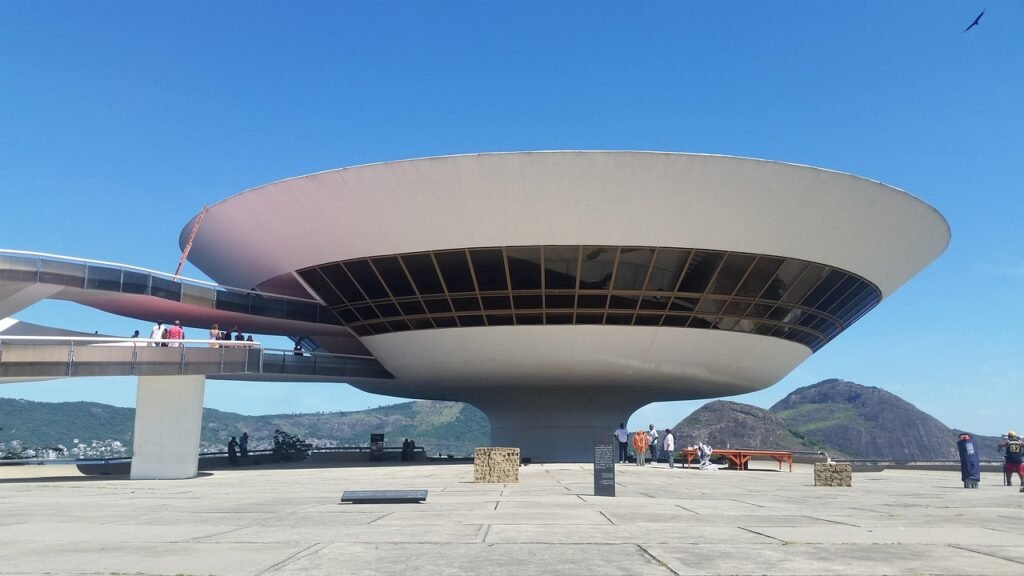
🇧🇷 POR | 🇫🇷 FR | 🇺🇸 EN | 🇪🇸 ES The Niemeyer Way is one of the most beautiful architectural routes in Brazil—and it’s less than 20 minutes from Rio de Janeiro. Stretching about 11 km along Niterói’s waterfront, Oscar Niemeyer left a sequence of buildings that look like they landed there from the future: the MAC with its flying-saucer form atop Boa Viagem Hill, the Popular Theatre hugging the curve of the beach, the Roberto Silveira Memorial with its white ramps. Entry fees range from free to R$ 20 (prices as of June 2026—check the official site before you go), the ferry from Rio costs around R$ 10, and the entire route can easily be done in a day. What separates a regular visit from one you’ll want to repeat is knowing the right order to see everything—and that’s exactly what this guide delivers. What You’ll Find in This Guide What is the Niemeyer Way How to Get There: Ferry, Car, or Bus What to See: MAC, Popular Theatre, Memorial & More Hours, Prices & How Much Time to Budget Best Time to Visit What to Combine on the Same Day Where to Eat Nearby Practical Tips & My Take Frequently Asked Questions (FAQ) The Niemeyer Way, Niterói (RJ). | Photo: WagnerKiyoshi / Pixabay What is the Niemeyer Way Few people know this, but Niterói has one of the largest concentrations of Oscar Niemeyer’s work outside of Brasília. The Niemeyer Way is the name given to the collection of cultural venues designed by the architect along Niterói’s waterfront—a route that starts at Praça do Povo in the city center and follows the edge of Guanabara Bay towards the Charitas neighborhood. The complex is made up of five main works: the Museum of Contemporary Art (MAC), the Popular Theatre of Niterói, the Roberto Silveira Memorial, the Oscar Niemeyer Foundation, and Juscelino Kubitschek Square. Each has its own personality, but they all share the same language: generous curves, white concrete, and an intense relationship with the surrounding landscape. When you stop in front of the MAC and see the disc floating over Boa Viagem Hill with Guanabara Bay in the background, you understand why this building became Niterói’s symbol. The route was designed to be done on foot, by bike, or by car along the waterfront. On foot, keep in mind that walking between points can take 30–40 minutes depending on your pace and the heat of the day. How to Get There: Ferry, Car, or Bus By Ferry (The Most Recommended Option) Taking the ferry from Rio to Niterói is not just practical—it’s an experience in itself. The crossing takes about 20 minutes and offers a front-row view of Christ the Redeemer, Sugarloaf Mountain, and the city’s skyline. The ferry departs from Praça XV (Praça XV Ferry Station) and arrives at the Niterói Ferry Station at Praça Araribóia. The ticket costs around R$ 10 (check the current price on the concessionaire’s website before you go). Once you disembark, you’re just steps away from Praça do Povo—where the Roberto Silveira Memorial and the Popular Theatre are located. The MAC is about 2.5 km from there, following the waterfront. View of Guanabara Bay at dusk. | Photo: klimaplay1 / Pixabay By Car (Crossing the Rio-Niterói Bridge) By car, the most direct access is via the Rio-Niterói Bridge—Brazil’s longest bridge, stretching 13.3 km over Guanabara Bay. From Rio, enter via Linha Vermelha or Av. Brasil heading towards the Niterói exit. On the Niterói side, follow Av. Visconde do Rio Branco towards the city center to reach Praça do Povo, or continue along the waterfront to the MAC. There is parking near the museum, but it’s limited on weekends. Avoid bringing the car on busy days—the ferry is a better bet. By Bus from Rio de Janeiro There are intercity bus lines that cross the Rio-Niterói Bridge and stop in downtown Niterói, from where you can walk to Praça do Povo or catch a local bus. Check the options on the Moovit app or the intercity transport concessionaire’s website for up-to-date lines and schedules, as they change frequently. By Taxi or Ride-Share App Taking an Uber or 99 from Rio’s South Zone, expect to pay between R$ 60 and R$ 100 depending on the time and traffic on the bridge. From Galeão Airport (GIG), the ride is usually between R$ 80 and R$ 130. It’s not the cheapest option, but it’s convenient if you have luggage or a tight schedule. What to See: MAC, Popular Theatre, Memorial & More MAC Niterói — The Icon The Museum of Contemporary Art is the most famous work in the complex and deserves at least an hour and a half of your visit. The building itself—a white concrete disc resting on a circular pedestal on the seaside rock—is so striking that many people visit without even going inside the exhibitions. But it’s worth the climb: the 360° panoramic view from up there is unlike anything you’ll see in Rio. On a clear day, you can see Sugarloaf Mountain, Corcovado, Governador Island, and the Bridge—all at once, with the bay breeze in your face. The permanent collection and temporary exhibitions vary, but the MAC usually features works by contemporary Brazilian and international artists. It’s open Tuesday to Sunday, from 10 am to 6 pm (last entry at 5:30 pm). Admission is R$ 20—free on Wednesdays. Confirm prices and programming on the official Niterói City Hall website before you go. MAC Niterói — Museum of Contemporary Art designed by Oscar Niemeyer. | Photo: WagnerKiyoshi / Pixabay Popular Theatre of Niterói The Popular Theatre is located at Praça do Povo, right by the ferry exit. The structure is unlike anything else: a curved helical ramp embraces the auditorium, which seats about 1,600 people. Unlike the MAC, the Popular Theatre doesn’t have a permanent exhibition—it functions as a venue for plays, concerts, and cultural events, some of which are free. Check what’s on at the Niemeyer Way website before deciding which day to go. Roberto Silveira
Rock in Rio 2026: Dates, Lineup, Tickets, and How to Get There

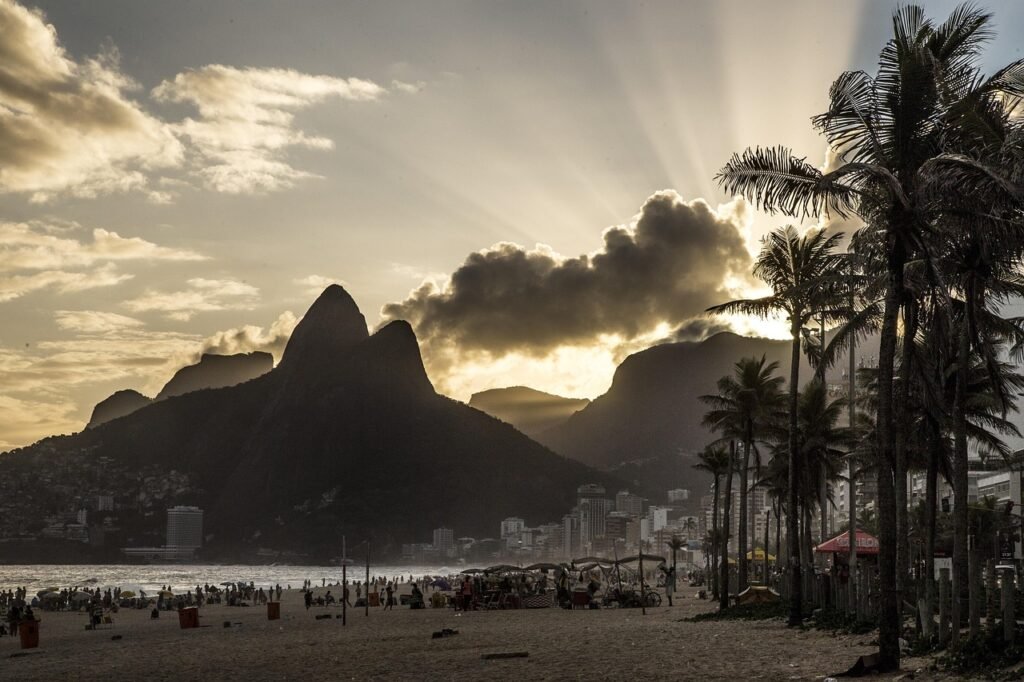
🇧🇷 POR | 🇫🇷 FR | 🇺🇸 EN | 🇪🇸 ES Rock in Rio 2026 is happening this September in Rio de Janeiro, bringing together over 40 acts across seven days of festival fun at the Cidade do Rock (City of Rock) in the Barra da Tijuca Olympic Park. If you’re planning a trip to Rio to catch the festival, this guide has everything you need to know: dates, tickets, how to get there, and what to do while you’re in town. About Rock in Rio 2026 Rock in Rio is one of the biggest music festivals in the world, born in Rio de Janeiro back in 1985. The 2026 edition marks the festival’s return to Brazil after four years — the last Rio edition was in 2022 — and promises to be one of the most ambitious yet, with 45 international acts, 15 of which are exclusive festival performances. The City of Rock gets a brand-new look for 2026, with the World Stage (Palco Mundo) expanded to over 100 meters wide and thousands of square meters of high-definition LED panels. Alongside the World Stage and the Sunset Stage — the two main stages — the festival features smaller stages scattered throughout the City of Rock for local and international acts all day long. This year’s lineup spans classic rock to electronic music, K-pop to international pop: Foo Fighters, Elton John, Avenged Sevenfold, Calvin Harris, Stray Kids, Maroon 5, and Twenty One Pilots are among the confirmed headliners. On the Brazilian side, Gilberto Gil, Capital Inicial, Detonautas, Barão Vermelho, and Ivete Sangalo share the stages with the international stars. Photo: Gwen24 via Pixabay Event Details at a Glance Event: Rock in Rio 2026 Dates: September 4, 5, 6, and 7 (1st weekend) and September 11, 12, and 13 (2nd weekend), 2026 Hours: Gates open at 2:00 PM; shows on the World Stage start at 5:00 PM (full schedule on the official website) Location: Cidade do Rock — Parque Olímpico, Av. Embaixador Abelardo Bueno, s/n, Barra da Tijuca, Rio de Janeiro, RJ — ZIP 22775-040 Main Stages: World Stage (Palco Mundo) and Sunset Stage (Palco Sunset) Age Rating: Check the official website (varies by day) Organizer: Rock World Daily Lineup (World Stage) Sept 4 (Fri): Foo Fighters, Rise Against, The Hives, Nova Twins Sept 5 (Sat): Avenged Sevenfold, Bring Me the Horizon, Machine Gun Kelly, Sepultura Sept 6 (Sun): Calvin Harris, Black Eyed Peas, Nelly, Barão Vermelho Sept 7 (Holiday): Elton John & Gilberto Gil (special collaboration), Jon Batiste, Luísa Sonza Sept 11 (Thu): Stray Kids, Alok, Hwasa Sept 12 (Fri): Maroon 5, Demi Lovato Sept 13 (Sat): Twenty One Pilots, Zara Larsson (Sunset Stage) Tickets — Where to Buy and Prices Rock in Rio 2026 tickets are sold exclusively through the Ticketmaster website. General sale started on June 8, 2026, at 7:00 PM. Each CPF (Brazilian taxpayer ID) can purchase up to four tickets per festival day. Sector Full Price Half Price Itaú (15% off) Gramado (General Admission) R$ 870.00 R$ 435.00 R$ 739.50 Comfort Zone R$ 1,950.00 R$ 975.00 – The Gramado sector gives you free access to the entire City of Rock and all shows. The Comfort Zone is an exclusive area near the World Stage with private bars and restrooms. Payment can be made via Pix or credit card (up to 6 interest-free installments; 8 installments for Itaú customers). Buy tickets on the official Ticketmaster website How to Get to the City of Rock The City of Rock is located in the Barra da Tijuca Olympic Park, about 22 miles from downtown Rio and 15 miles from Copacabana. Traffic in the area on festival days tends to get heavy from early afternoon, so public transportation is your safest bet. Metro + BRT (most affordable option): Take Line 4 (yellow) of the metro to Jardim Oceânico station, then hop on the BRT Transolímpica bus heading to Parque Olímpico station. The transfer costs R$ 4.30 with a single ticket. The BRT runs on extended hours on show days, operating until about 2 hours after the last performance ends. Rock Express: An exclusive shuttle bus service departing from the Jardim Oceânico and Alvorada terminals every 10 minutes, from 1:00 PM to 5:00 AM, with no intermediate stops until the Olympic Terminal. Primeira Classe Bus: An executive bus service with 16 boarding points in Rio and 22 in other cities in RJ, SP, and MG. Round trip for R$ 23.00; departures between 11:00 AM and 7:00 PM with no stops. Ride-sharing apps (Uber, 99, Cabify): They work, but expect long wait times when leaving. Arrange your pickup point in advance through the app. Photo: Pexels via Pixabay What to Do Near the City of Rock Barra da Tijuca is a planned neighborhood with malls, beaches, and restaurants, but Rio has so much more to offer before or after the festival. If you’re spending more than a day in the city, make sure to check out the iconic landmarks that are less than 40 minutes from the City of Rock. Christ the Redeemer and Corcovado Mountain are a must for anyone visiting from out of town. There are guided tour options departing from different points in the city, with a private van and an expert guide — a convenient way to get to the monument without relying on the Corcovado train or figuring out your own transport: Christ the Redeemer Tour — Civitatis Sugarloaf Mountain is another unmissable attraction, accessible by cable car with panoramic views of Guanabara Bay. Guided tours in Portuguese depart from downtown and the South Zone: Sugarloaf Mountain Tour — Civitatis Where to Stay Nearby If you want to minimize travel time on festival days, Barra da Tijuca is the most practical option — the Olympic Park is just a few minutes by car or Uber from most hotels in the neighborhood. The downside is that Barra has fewer dining and sightseeing options beyond the malls. If you prefer to stay in an area with more urban energy, go for the South Zone
Rio Winter Festival 2026: Lineup, Tickets, and How to Get There

🇧🇷 POR | 🇫🇷 FR | 🇺🇸 EN | 🇪🇸 ES The Rio Winter Festival 2026 takes place from July 24 to August 2 at Marina da Glória, in the Flamengo Park, bringing together 18 acts over 6 nights of open-air concerts on the shores of Guanabara Bay. The lineup features Ludmilla, Luísa Sonza, Titãs, Capital Inicial, Charlie Brown Jr., IRA!, Nando Reis, Arnaldo Antunes, Seu Jorge with Marcelo D2, Ana Carolina, and Criolo, among other celebrated names in Brazilian music. Tickets start at R$ 160 (half-price General Admission) and are sold through Bilheteria Digital. The festival is less than 20 minutes from Copacabana by subway — time to fit this experience into your Rio trip. About the Rio Winter Festival 2026 Now in its 9th edition, the Rio Winter Festival is Rio de Janeiro’s biggest winter music event and one of the most beloved fixtures on the city’s cultural calendar. The choice of Marina da Glória as the venue is no accident: the location offers one of Rio’s most stunning backdrops, with views of Sugarloaf Mountain, Christ the Redeemer in the distance, and the bay’s mirror-like waters just steps from the crowd. The 2026 edition puts MPB (Brazilian Popular Music), pop, and Brazilian rock at center stage, bringing together different generations at a single festival. On one side, legendary names from 80s and 90s Brazilian rock — Titãs, Capital Inicial, IRA!, and Charlie Brown Jr. on one night. On the other, today’s biggest stars like Ludmilla and Luísa Sonza sharing the second week’s lineup with icons like Seu Jorge and Criolo. The result is a festival that speaks to audiences from 18 to 55 without losing its identity. Photo: candidsoul via Pixabay Event Details Event: Rio Winter Festival 2026 — 9th Edition Dates: July 24, 25, and 26 + July 31 and August 1 and 2, 2026 Times: Fridays: gates at 7 PM | Saturdays: gates at 5 PM | Sundays: gates at 3 PM Location: Marina da Glória, Av. Infante Dom Henrique, s/nº, Glória, Rio de Janeiro, RJ Presented by: Open Air Brasil Full Daily Lineup July 24 (Friday): Samuel Rosa + Negra Li | Nando Reis + Arnaldo Antunes | Geraldo Azevedo + Chico César July 25 (Saturday): Titãs | Capital Inicial | Charlie Brown Jr. | IRA! July 26 (Sunday): Marina Lima | Ana Carolina | Maria Gadú July 31 (Friday): Ludmilla | Luísa Sonza | Marina Sena August 1 (Saturday): ANAVITÓRIA | BK’ | Gilsons August 2 (Sunday): Seu Jorge with Marcelo D2 | Criolo with Rael Tickets — Where to Buy and Prices Tickets are sold exclusively through Bilheteria Digital. There are two sections available: the Arena FIR (general festival access with a standing area near the stage) and the Lounge Elo (premium area with seating, exclusive bars and restrooms, and prime views). Elo cardholders get a permanent 15% discount. Section Full Price Half Price Arena FIR (General Admission) R$ 320.00 R$ 160.00 Lounge Elo (Premium) R$ 640.00 R$ 320.00 Tickets are sold per day — you choose which night(s) you want to attend. The festival has accessible infrastructure for people with disabilities; the PWD ticket includes a companion when needed. Buy tickets at Bilheteria Digital How to Get to Marina da Glória Marina da Glória is located in the Glória neighborhood, between the historic center and Flamengo, and is one of the best-connected spots in Rio — great news if you’re staying in the South Zone or downtown. Subway (easiest option): Glória station is on Line 1 (orange) and is about a 15-minute walk down Rua do Catete to the Marina. Catete station, also on Line 1, is another option at a similar distance. From the subway to the Marina, the walk goes through Flamengo Park — a pleasant stroll, especially when the weather cooperates. Bus: Several bus lines stop near the Marina, especially lines 107, 433, and 472. The closest stop is about a 10-minute walk from the stage. From Copacabana and Ipanema: Take Line 1 of the subway toward Uruguai (downtown direction) and get off at Glória. The trip takes about 20 minutes. By taxi or ride-share, the trip from Copacabana to the Marina takes around 15 to 25 minutes depending on traffic. Uber, 99, and Cabify: They all work normally. For the exit, set your pickup point in the app in advance to avoid long lines in the Marina area. Photo: Activedia via Pixabay What to Do Near Marina da Glória The Glória neighborhood and the immediate area around the Marina have some of Rio’s most charming and less touristy attractions. If you’re going to the festival, it’s worth arriving early or setting aside a day to explore the area. Santa Teresa and Lapa are just minutes from the Marina and concentrate much of Rio’s cultural and nightlife scene. The classic route starts in the winding streets of Santa Teresa — with its studios, bistros, and views of Corcovado — and then descends into Lapa, with its historic arches and choro and samba scene. If you want to do this with a local guide: Santa Teresa and Lapa Tour — Civitatis For those who want to explore Rio more calmly before the festival, the free walking tour of the historic center starts near the Marina and shows the city’s main historical landmarks in 2 to 3 hours: Free Walking Tour of Rio’s Historic Center — Civitatis Where to Stay Nearby The Glória and Flamengo neighborhoods are the closest options to the Marina and usually have more affordable prices than the South Zone, with good subway connections to the rest of the city. Catete is also a quiet, well-located alternative. If you prefer the buzz of Ipanema, Leblon, or Copacabana, you can stay in the South Zone without any issues — the subway gets you there in under 25 minutes. Check out options and compare neighborhoods in our Rio de Janeiro accommodation guide. Official Channels Official website: festivaldeinvernorio.com.br Tickets: bilheteriadigital.com Frequently Asked Questions How much are tickets for the Rio Winter Festival 2026? General Admission (Arena
Roberto Carlos in Rio 2026: Dates, Tickets, and How to Get to Qualistage

🇧🇷 POR | 🇫🇷 FR | 🇺🇸 EN | 🇪🇸 ES Roberto Carlos is performing in Rio de Janeiro on August 15 and 16, 2026 at Qualistage in Barra da Tijuca, with doors opening at 6:30 PM and the show starting at 8:30 PM. The venue holds up to 9,000 people and is located inside Via Parque Shopping on Avenida Ayrton Senna. Tickets range from R$ 310 (half-price, White Section) to R$ 960 (full-price, Blue Section) and are sold through Eventim — and also at the Qualistage box office, with no service fee. Getting there is easiest via the TransCarioca BRT, with a stop just 600 meters from the venue. Two days, two chances to see the King of Brazilian music live. About Roberto Carlos’s Rio Shows in 2026 Roberto Carlos is one of the biggest icons of Brazilian popular music. With over six decades of a legendary career, the singer from Espírito Santo—adopted by Brazil as a carioca at heart—keeps a tradition of Rio shows that brings together generations of fans. The August 2026 performances are part of the artist’s annual tour across Brazil, featuring a setlist that spans his greatest hits—from “Detalhes” to “Lady Laura,” from “Jesus Cristo” to “Emoções.” Qualistage—formerly known as Metropolitan—is now one of Rio’s top concert venues, with a capacity of up to 9,000 spectators. Its indoor structure offers great acoustics and visibility across all sections, from the White Section near the entrance to the exclusive Blue Section and VIP boxes. Photo: thekaleidoscope via Pixabay Event Details Event: Roberto Carlos — Rio de Janeiro Show 2026 Dates: August 15, 2026 (Saturday) and August 16, 2026 (Sunday) Time: Doors at 6:30 PM | Show at 8:30 PM Location: Qualistage (Via Parque Shopping), Av. Ayrton Senna, 3,000, Barra da Tijuca, Rio de Janeiro, RJ Main Attraction: Roberto Carlos Age Rating: 18+ — minors must be accompanied by a legal guardian Venue Capacity: 9,000 people Tickets — Where to Buy and Prices Tickets are sold online through Eventim and in person at the official Qualistage box office, with no service fee. The box office is open Monday through Saturday from 11 AM to 8 PM, Sundays and holidays from 1 PM to 8 PM, and on show days until 30 minutes after the performance starts. Section Full Price Half-Price / PWD Blue Section R$ 960.00 R$ 480.00 Yellow Section R$ 820.00 R$ 410.00 White Section R$ 620.00 R$ 310.00 Online payments can be split into up to 10 installments on a credit card or paid in full via Pix. Half-price entry is guaranteed by law for students, seniors, teachers, and other eligible categories. Check tickets on Eventim | Info on Qualistage’s website How to Get to Qualistage Qualistage is located inside Via Parque Shopping at Avenida Ayrton Senna, 3,000, in Barra da Tijuca. The mall has its own parking lot, but on show nights the area gets packed fast—arrive at least an hour early if you’re driving. TransCarioca BRT (easiest option): The Via Parque BRT station is about 600 meters from Qualistage. The BRT connects Barra da Tijuca to Tom Jobim International Airport and Fundão, passing through several neighborhoods in the North and West Zones. Service is usually reinforced on show nights. Metro + BRT: Take Line 4 (yellow) of the metro to Jardim Oceânico station, then hop on the TransCarioca BRT toward Via Parque station. The final walk to Qualistage is about 600 meters. The metro + BRT integration is done with a single ticket. Bus: Lines 315, 361, 565, 614, and 880 stop near the mall. Check the route on the Moovit app or Fetranspor’s website before heading out. Uber, 99, and Cabify: These work well for getting there; for the way out, schedule your pickup in advance on the app—demand is high right after the show ends. Photo: StockSnap via Pixabay What to Do Near Qualistage Barra da Tijuca has long beaches and shopping malls, but if you’re coming from outside Rio specifically for the show, it’s worth spending the days before exploring the city’s iconic landmarks—after all, Christ the Redeemer and Sugarloaf Mountain are less than 40 minutes from Qualistage. Christ the Redeemer is a must-see. A private van tour with a Portuguese-speaking guide takes the hassle out of coordinating the Corcovado train, parking, and lines on your own: Christ the Redeemer Tour — Civitatis Sugarloaf Mountain offers one of the world’s most famous views, with the cable car climbing to the summit in two stages. Tours depart from downtown and the South Zone with flexible hours: Sugarloaf Mountain Tour — Civitatis Where to Stay Nearby If you want to minimize travel on show day, you can stay right in Barra da Tijuca—there are good hotels and apartment-hotels just minutes from Qualistage. The downside is that Barra has less cultural and dining life outside the malls. For a more classic Rio experience, the South Zone neighborhoods (Ipanema, Leblon, Copacabana, Flamengo) offer more restaurants, beaches, and attractions. The combination of Line 4 metro + TransCarioca BRT gets you to Qualistage in about 40 minutes. Check out our Rio de Janeiro accommodation guide to compare neighborhoods and prices. Official Profiles Official website: robertocarlos.com Tickets: eventim.com.br Qualistage: qualistage.com.br Frequently Asked Questions How much do tickets cost for Roberto Carlos at Qualistage in 2026? Prices range from R$ 620 (full-price, White Section) to R$ 960 (full-price, Blue Section). Half-price tickets go from R$ 310 to R$ 480, depending on the section. Tickets are sold online through Eventim and in person at the Qualistage box office, with no service fee. What time is the Roberto Carlos show in Rio? Doors open at 6:30 PM on both days (August 15 and 16, 2026), and the show is scheduled to start at 8:30 PM. It’s recommended to arrive at least an hour early to avoid lines at the entrance. How do I get to Qualistage by public transport? The easiest option is the TransCarioca BRT, with the Via Parque stop 600 meters from Qualistage. If you’re coming by metro, take Line 4 (yellow) to Jardim
Liniker – Bye Bye Caju in Rio: Tickets, Prices, and How to Get to Farmasi Arena

🇧🇷 POR | 🇫🇷 FR | 🇺🇸 EN | 🇪🇸 ES Liniker brings the Bye Bye Caju Tour to Rio de Janeiro on Saturday, August 22, 2026, with a show at Farmasi Arena in Barra da Tijuca. This series of performances marks the farewell to the Caju album cycle — the record that won three Latin Grammys in 2025 and has surpassed 380 million streams on digital platforms — and represents the singer’s debut as a solo headliner in large-scale arenas. Tickets start at R$ 147.50 (half-price) and are sold exclusively through Eventim. Gates open at 5 PM. Below, find out which section offers the best value, how to go straight from the metro to the arena, and what to do in Barra before the show. About the Bye Bye Caju Show Released in 2023, the album Caju redefined Liniker’s reach in Brazilian and international music. Structured as a continuous narrative, the album introduces the character Caju — the singer’s alter ego — on a symbolic journey that blends R&B, soul, and MPB. The recognition came in the form of three Latin Grammys in 2025, including Best Contemporary Pop Album in Portuguese, and four trophies at the 2024 Multishow Awards. The Bye Bye Caju tour is the farewell to this cycle and Liniker’s debut in solo stadium and arena shows. There are four dates: São Paulo (July 11, Allianz Parque), Rio de Janeiro (August 22, Farmasi Arena), Belém (September 19, Espaço Náutico Marine), and Salvador (November 7, Arena Fonte Nova). The production is by 30e. In Rio, Liniker had previously performed at Vivo Rio in November 2024 as part of the album’s first tour. The August 2026 show is a different scale: Farmasi Arena places the artist on the same level as Brazil’s biggest concerts. For carioca fans, it’s an opportunity that won’t come around again anytime soon. Photo: Pexels via Pixabay Event Details Event: Liniker – Bye Bye Caju Date: Saturday, August 22, 2026 Time: Gates open at 5 PM | Show time: TBD Venue: Farmasi Arena, Avenida Embaixador Abelardo Bueno, 3401, Barra da Tijuca, Rio de Janeiro, RJ — Zip Code 22775-040 Headliner: Liniker Age Rating: 16 and over. Minors aged 16 to 17 must be accompanied by a parent or legal guardian with a valid ID. Presented by: 30e Tickets — Where to Buy and Prices Tickets for Liniker’s show at Farmasi Arena are on sale exclusively through the Eventim website. General public sales began on December 22, 2025. Itaú cardholders had a presale two days earlier, with a 15% discount on full-price tickets. Each CPF can purchase up to four tickets. Section Full Price Half-Price Social Entry N3 Seats R$ 295.00 R$ 147.50 R$ 206.50 N1 Seats R$ 645.00 R$ 322.50 R$ 451.50 General Admission Floor R$ 695.00 R$ 347.50 R$ 486.50 VIP Package R$ 1,195.00 R$ 847.50 R$ 986.50 The VIP Package includes access to the premium floor, soundcheck entry, an exclusive kit, and early entry. VIP schedules are communicated 48 hours before the show. The package does not include a Meet & Greet with Liniker. Tickets are delivered via QR code in the Eventim app (Eventim.PASS) 24 hours before the event — prints and screenshots are not accepted. Buy tickets on the official Eventim website How to Get to Farmasi Arena Farmasi Arena is located in Barra da Tijuca, at Avenida Embaixador Abelardo Bueno, 3401, near the Olympic Park. The most practical public transport combo is Metro Line 4 (yellow) to Jardim Oceânico station, followed by an Uber or 99 ride for another 10 to 15 minutes to the arena. For those coming from the North Zone or the Baixada, the BRT TransCarioca to the Alvorada terminal and then a second ride to the venue is an option. From Ipanema or Leblon, Line 4 departs from General Osório and reaches Jardim Oceânico in about 20 minutes. By car, use the Linha Amarela from the North Zone or the Túnel da Grota Funda from the West Zone. Parking around the arena is paid and gets packed on show days — arrive early or opt for ride-sharing apps. Photo: scratsmacker via Pixabay What to Do Near Farmasi Arena Barra da Tijuca is about 9 miles from Christ the Redeemer and 12 miles from Sugarloaf Mountain. Make the most of your trip to Rio by visiting the city’s two most iconic landmarks the day before the show. The Christ the Redeemer tour goes up Corcovado Mountain and offers one of the world’s most famous views, with Rio de Janeiro and Guanabara Bay in the background. Christ the Redeemer Tour — Civitatis Sugarloaf Mountain combines two cable cars, panoramic views, and an unforgettable sunset over Guanabara Bay — the best activity for seeing Rio from above with more tranquility. Sugarloaf Mountain Tour — Civitatis Where to Stay Nearby If you’re coming from out of town and want to stay close to the arena, there are good accommodation options in Barra da Tijuca itself. However, the neighborhood has less nightlife and dining than the South Zone. If sightseeing and beaches are your priority, go for Ipanema, Leblon, Copacabana, or Botafogo — the trip to the arena takes between 30 and 45 minutes by Uber outside peak hours. Official Profiles Instagram: @liniker Tickets: eventim.com.br Venue: farmasiarena.com.br Frequently Asked Questions How much are tickets for Liniker’s show in Rio de Janeiro? Tickets for Liniker – Bye Bye Caju at Farmasi Arena start at R$ 147.50 (half-price in N3 Seats) and go up to R$ 1,195.00 (full-price VIP Package). Check updated prices on the official Eventim website. How do I get to Farmasi Arena by public transport? The most practical route combines Metro Line 4 (yellow) to Jardim Oceânico station with an Uber or 99 ride for another 10 to 15 minutes to the arena. Those coming from the North Zone can take the BRT TransCarioca to the Alvorada terminal and then a ride-sharing app. What is the age rating for Liniker’s show at Farmasi Arena? The age rating is 16 and over. Teens aged 16 and
NFL Rio Game 2026: Cowboys vs. Ravens at Maracanã — Tickets, Prices, and How to Get There

🇧🇷 POR | 🇫🇷 FR | 🇺🇸 EN | 🇪🇸 ES The NFL Rio Game 2026 brings an official league game to Rio de Janeiro for the first time: the Baltimore Ravens and Dallas Cowboys face off at Maracanã Stadium on Sunday, September 27, 2026, with kickoff at 5:25 PM (Brasília time). The matchup is part of Week 3 of the regular season and pits two of the NFL’s most popular teams against each other in one of the world’s most iconic stadiums, which holds 78,000 people. Tickets start at R$ 247.50 (half-price) and are on sale at Ticketmaster. Keep reading to find out how to get there by metro, which sections offer the best views, and what to do in Rio around game day. About the NFL Rio Game 2026 The September 27 game is the NFL’s first in Rio de Janeiro and is part of a series of at least three international games confirmed for the city in the coming years. Previous NFL editions in Brazil took place in São Paulo, with games in 2024 and 2025 at Arena Corinthians — each drawing around 47,000 fans. Maracanã raises the stakes: 78,000 seats and a stadium that has hosted World Cup finals, the 2016 Olympic Games, and historic Brazilian soccer matches. The Ravens vs. Cowboys matchup is one of the most attractive the NFL could have chosen for this showcase. On Baltimore’s side, two-time league MVP Lamar Jackson leads the offense. For the Cowboys — designated as the home team — Dak Prescott and wide receiver CeeDee Lamb run the show. This is the Cowboys’ first international game since 2014 and the Ravens’ debut outside London in international play. Brazil is now one of the NFL’s largest markets outside the United States, with over 36 million fans. Rio de Janeiro hosts the game at the best time to visit: September marks the start of Rio’s spring, with pleasant weather, calm beaches, and prices below summer peak. Photo: KeithJJ via Pixabay Event Details Event: NFL Rio Game 2026 Date: September 27, 2026 (Sunday) Time: Kickoff at 5:25 PM (Brasília time) Location: Maracanã Stadium, Rua Professor Eurico Rabelo, s/n, Maracanã, Rio de Janeiro, RJ Teams: Dallas Cowboys (home) vs. Baltimore Ravens Competition: 2026 NFL Regular Season — Week 3 Capacity: 78,000 seats Tickets — Where to Buy and Prices Tickets for the NFL Rio Game 2026 are on sale through Ticketmaster. All tickets are digital and will be available on the Quentro app, which you should download before game day. Each CPF (Brazilian taxpayer ID) can purchase up to four tickets during the general sale, which started on June 9, 2026. An exclusive presale for American Express cardholders ran from May 27 to 31. Category Full Price Half-Price Basic section from R$ 495.00 from R$ 247.50 Mid-range sections check Ticketmaster check Ticketmaster Premium / hospitality sections up to R$ 5,080.00 — Check current availability and sections on the official Ticketmaster website. Tickets will only be available on the Quentro app starting one month before the game — no screenshots or printed tickets will be accepted at the entrance. Buy tickets on the official Ticketmaster website How to Get to Maracanã The metro is the safest and fastest option on game day. Maracanã Stadium is located in the Maracanã neighborhood in the North Zone, served by two stations on Line 2 (green): Rei Pelé – Maracanã Station: access to Gates A, B, and C São Cristóvão Station: access to Gates D, E, and F If you’re coming from Copacabana, Ipanema, or Leblon, take Line 1 (orange) and transfer at Botafogo Station to Line 2 (green), getting off at the station corresponding to your gate. The trip takes about 32 minutes with one transfer. From Flamengo, Glória, or Centro, the route is the same: Line 1 to Botafogo, then Line 2 toward Pavuna. Arrive at the stadium at least 90 minutes early — security lines at international NFL games tend to be long. After the game, the area will be congested: stick with the metro over Uber or taxis, which will have a hard time getting near the stadium after the game. Photo: Pexels via Pixabay What to Do Near Maracanã Maracanã is in the North Zone, a bit off the classic tourist trail — but just a metro ride away from two of Rio’s main attractions. Use the days leading up to the game to explore the city. Christ the Redeemer, atop Corcovado Mountain, offers one of the most famous views in the world and is a must-see for anyone visiting Rio for the first time. Book in advance, especially in September. Christ the Redeemer Tour — Civitatis The Free Tour of Rio’s Historic Center covers the main downtown spots — Lapa, Cinelândia, Praça XV, and surroundings — with a Portuguese-speaking guide, perfect for understanding the city’s history before the big event. Free Tour of Rio’s Historic Center — Civitatis Where to Stay for the NFL Rio Game Maracanã is in the Maracanã neighborhood in the North Zone — a residential area with few restaurant and nightlife options. To balance logistics and tourism, Centro or Lapa are good choices: they’re well connected by metro to both the stadium and the South Zone. If you prefer beaches and dining, you’re better off in Copacabana, Botafogo, or Ipanema — from any of these neighborhoods, the metro reaches Maracanã with one transfer at Botafogo. Official Profiles NFL International: nfl.com/international Tickets: ticketmaster.com.br Cowboys Instagram: @dallascowboys Ravens Instagram: @ravens Frequently Asked Questions When is the NFL game in Rio de Janeiro in 2026? The NFL Rio Game 2026 takes place on Sunday, September 27, 2026, with kickoff at 5:25 PM (Brasília time), at Maracanã Stadium. Which teams are playing in the NFL Rio Game 2026? The teams are the Dallas Cowboys and Baltimore Ravens. The Cowboys are the home team. The game is part of Week 3 of the 2026 regular season. How much do tickets cost for the NFL Rio Game? Tickets start at R$ 247.50 (half-price) and can go up
Christ the Redeemer by Uber, Car, or on Foot: Your Questions Answered

🇧🇷 POR | 🇫🇷 FR | 🇺🇸 EN | 🇪🇸 ES So you’ve decided you’re going up to Christ the Redeemer, but you still have some specific questions: Can you call an Uber? Where exactly do you buy the train ticket? Is it possible to leave your car there? This guide gives you straight answers to the most searched questions about getting to the monument, no fluff — with prices, official links, and what to pack in your backpack. In this article Can you go by Uber or car to Christ the Redeemer? Where to park near Corcovado? Where to buy the train ticket and how much it costs Where to catch the Corcovado train How much does the van cost and where to board Can you hike up? Is it free? What to wear to visit Christ the Redeemer Frequently asked questions Conclusion Can you go by Uber or car to Christ the Redeemer? “Can I call an Uber and go straight up to Christ?” It’s the most common question, and the answer is: only up to a certain point. Private cars and ride-sharing apps only have access up to the Paineiras Visitor Center; from there, the final stretch to the monument is exclusively by the official van (included in the ticket) or on foot via the trail. There’s no option for a driver to drop you off at the door of Christ the Redeemer — even those taking the van or train need to complete the last leg on these specific modes, due to flow control within the Tijuca National Park. If you’re looking to cut down on travel time, an Uber to Paineiras works well: it avoids the traffic in Cosme Velho and is usually cheaper than a taxi to the train station, especially if you’re coming from neighborhoods like Botafogo or Flamengo. Photo: Pedro Ramos / Pexels Where to park near Corcovado? Here’s a point that catches many people off guard: the Paineiras Visitor Center does not have its own parking lot, and leaving your car on the surrounding public streets is not recommended — there’s no guarantee of safety, and the flow of vans and buses leaves little space. The guidance from those who organize access is to come by ride-sharing app, taxi, or public transport and avoid taking your private car there. Those who insist on driving usually opt to park in a more central spot (Botafogo or Flamengo, for example) and complete the trip by Uber or taxi. Where to buy the train ticket and how much it costs The official ticket for the Corcovado Train is sold at tremdocorcovado.rio, as well as on the train’s own app (those who buy through the app get priority boarding). Buying in advance is what saves you from a long line at the station, especially on busy days. 2026 prices: adult R$ 134; children 7 to 11 years old R$ 107; seniors over 60 (with Brazilian ID) R$ 70; people with disabilities, Youth ID holders, and Brazilian students R$ 107. Children up to 6 years old are free, as long as they travel on a guardian’s lap and present ID. Confirm the prices on the official website before buying, as adjustments happen throughout the year. Where to catch the Corcovado train Boarding is at Cosme Velho Station, in the neighborhood of the same name — about a 5 to 10-minute drive from Downtown, Flamengo, or Laranjeiras. The train runs from 8 am to 5 pm Monday through Friday and from 8 am to 6 pm on Saturdays, Sundays, and holidays, with departures every 20 minutes. Arrive with plenty of time: on busy days, the wait time before boarding can exceed an hour, even with a purchased ticket. Photo: Rodrigo Menezes / Pexels How much does the van cost and where to board The official van is operated by Paineiras Corcovado and is usually cheaper than the train. Boarding directly at the Paineiras Visitor Center, the ticket costs between R$ 56.50 and R$ 81.50 per adult; departing from points like Copacabana or Largo do Machado, with transportation included to Paineiras, the price goes up to between R$ 98 and R$ 126.50. In both cases, the price already covers the round trip and access to the monument — it’s worth checking the updated price at paineirascorcovado.com.br before finalizing your purchase. Can you hike up? Is it free? “Is it possible to go up to Christ the Redeemer for free?” There is no completely free entry to the monument, but the trail is, by far, the cheapest option. Hiking through Tijuca National Park — via the Paineiras-Corcovado Trail or the route that passes through Parque Lage — you only pay the park entrance fee, not the full train or van ticket. Still, when you reach the top, you have to go through the ticket booth to access the monument area, so “free” doesn’t really exist in practice — what exists is the most economical way to get there. The climb is steep and takes 3 to 4 hours to reach the top, depending on your starting point and fitness level — it’s not recommended for those with little hiking experience, for small children, or on rainy days when the ground gets slippery. Photo: Allan Carvalho / Pexels If you want to carefully weigh the pros and cons of each mode of transport — including total time, comfort, and level of physical effort — it’s worth complementing your reading with our complete comparison between train, van, and trail. What to wear to visit Christ the Redeemer The top of Corcovado is usually cooler and windier than the beach down below, so it’s worth bringing a light jacket even on warm days. Comfortable sneakers or closed-toe shoes help a lot — especially if you opt for the trail or plan to walk around the viewing platform area. Sunscreen and a hat or cap make a difference in the waiting line, which is usually outdoors with little shade. If the weather is unstable, a compact raincoat pays
What to Do in Rio de Janeiro in 5 Days: A Complete Itinerary

🇧🇷 POR | 🇫🇷 FR | 🇺🇸 EN | 🇪🇸 ES You can absolutely see Rio de Janeiro in five days if you know how to prioritize: one day for Christ the Redeemer and the Tijuca Forest, one for Sugarloaf Mountain and the historic center, two for the South Zone beaches, and a free day for Santa Teresa or a nearby town. The city packs mountains, sea, and history into a surprisingly compact area, so you won’t waste hours commuting between sights. This itinerary is designed for travelers flying in, staying in the South Zone, and wanting to hit the highlights without the rush—prices and hours are current for 2026, but always double-check before you head out. In this article How to get to Rio de Janeiro Best time to visit and how long to stay Day-by-day itinerary: what to do in 5 days What to combine with your trip Where to eat in Rio Where to stay Practical tips Frequently asked questions Conclusion How to get to Rio de Janeiro “Which airport should I choose?” It depends on your plans. Galeão (GIG), on Governador Island, handles most international flights and a good chunk of domestic ones; it’s about 40 minutes from Leblon in light traffic, closer to an hour during rush hour. Santos Dumont (SDU), downtown, mainly operates the air shuttle with São Paulo and other short-haul domestic flights—and the big perk is that it’s just 15-20 minutes from Copacabana. From either airport, the easiest option if you have luggage is a taxi or rideshare app. There’s also the executive BRT/Premium bus connecting Galeão to the South Zone for much less than a taxi, but it takes longer and isn’t ideal with big bags. Once you’re in the city, you’ll switch between the metro (fast and safe for getting from Copacabana to downtown), rideshare apps, and official vans and trains for tourist spots—like the Corcovado train, which is the only way to reach Christ the Redeemer by rail. Photo: Cristiano Junior/Pexels Best time to visit and how long to stay “Is it better to go in summer or winter?” Both seasons work, but for different reasons. Between December and March, the heat is intense (easily above 95°F with a higher heat index) and the beaches are packed, but the city is at its most vibrant, with Carnival as the main event. Between June and August, temperatures are mild, ranging from the mid-60s to the high 70s°F, the days are drier, and tourist spots have shorter lines—it’s the season most guides recommend for comfort and fewer crowds. Five days are enough to cover the classics without rushing: a shorter 3-day itinerary would force you to choose between the mountains and the beach; a longer one of 7 days or more opens up day trips to Búzios, Paraty, or Petrópolis. Make sure to leave at least one morning free—low clouds over Corcovado or a heavy downpour can throw your plans off, and it’s good to have a buffer to reschedule. Day-by-day itinerary: what to do in 5 days The logic of this itinerary groups attractions by area, so you’re not crisscrossing the city twice in one day. Day 1 — Christ the Redeemer and Tijuca Forest Start early. The Corcovado train departs from the Cosme Velho neighborhood every 20 minutes and climbs for about 20 minutes through the Tijuca Forest—sit on the left side going up for views of Guanabara Bay. A train ticket costs between R$ 97.50 and R$ 122.50 for adults; if you hike up the trail, the price drops to R$ 58 (R$ 32 with a half-price discount). Trains run from 8 AM to 5 PM on weekdays and until 6 PM on weekends and holidays. Buy your ticket on the official Corcovado Train website at least a few days in advance—during peak hours, especially around noon, the line to reach the top can take over an hour even if you already have a ticket. In the afternoon, if you still have energy, Parque Lage is at the base of Corcovado and has a trail leading to Pedra da Gávea and the cable car—but that’s a multi-hour hike, not a quick afternoon stroll. Instead, take the rest of the day easy, since Christ the Redeemer usually eats up the whole morning between travel and waiting in line. Day 2 — Sugarloaf Mountain and Historic Downtown The Sugarloaf cable car departs from Praia Vermelha in Urca in two stages: first to Morro da Urca, then to the top of Sugarloaf Mountain. Prices range from R$ 85 to R$ 295 depending on the ticket type—residents or those born in Rio pay the “Bilhete Carioca” fare (around R$ 89), while tourists from other states usually pay close to R$ 160. It’s generally open from 8 AM to 8 PM, but check the exact hours on the official Sugarloaf Mountain Park website before you go, as they change with the season. Go early—before 9 AM—to catch the morning light and shorter lines. After the cable car, head to downtown: Selarón Steps, the Monastery of São Bento, and the Lapa neighborhood with its famous arches are a short rideshare ride from Urca, making for an easy half-day block. Photo: Arnaldo Silva/Pexels Day 3 — Copacabana and Ipanema This is your relaxed beach day. Walk along the Copacabana boardwalk in the morning, when the sun isn’t too strong, and head to Copacabana Fort, which offers views of the entire shoreline and a small history museum. In the afternoon, move to Ipanema: Posto 9 draws a younger crowd, and watching the sunset from Arpoador—the rock formation separating the two beaches—is one of the most popular free activities for locals, no exaggeration. If you have time left, Rodrigo de Freitas Lagoon is just a few minutes from Ipanema and has a bike path for renting a bicycle around the entire lagoon, with Christ the Redeemer in the background—a different photo angle from what you got on Day 1. Photo: Filipe Braggio/Pexels Day 4 — Santa Teresa and Museums Santa Teresa is