First-timers at Tijuca National Park usually head straight for the viewpoints — Vista Chinesa, Mesa do Imperador, the spots that pop up in every Rio travel photo. The waterfalls often take a backseat in that itinerary, but they hide a side of the forest many people don’t even know exists: running water, smooth rocks, the sound of dense jungle instead of the city traffic down below.
The good news is you can visit more than one waterfall on the same trip without tackling a peak hike. Cascatinha Taunay is just a few yards from the main gate. The Job de Alcântara pool is right next to it. And the Horto falls are in a separate section with their own access. This guide shows what each one offers, how to get there, and what to know before you get in the water — because not every waterfall in Tijuca allows swimming.
Dica: Aproveite também para fazer estes passeios no Rio de Janeiro
Cristo Redentor de trem e tour pelo Rio de janeiro. Duração: 4 horas
Passeio grátis pelo centro histórico do Rio e Lapa. Duração: 3 horas
Free tour pelo bairro de Santa Teresa. Duração: 2h 30m
Amanhecer no mirante de Dona Marta + Cristo Redentor Duração: 4 horas
Veja todos os passeios e tranfers no Rio de Janeiro
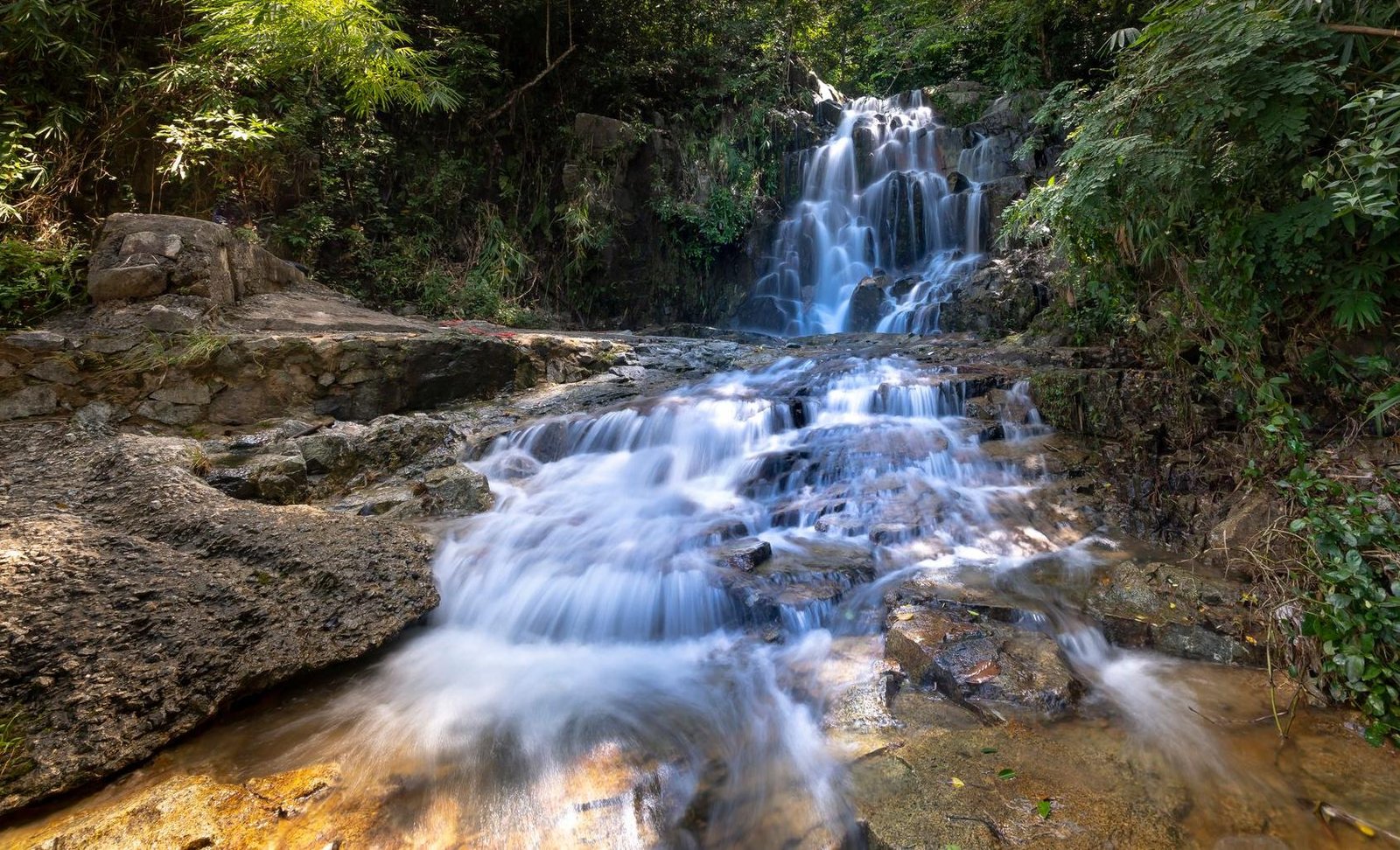
Cascatinha Taunay: The Park’s Tallest Waterfall
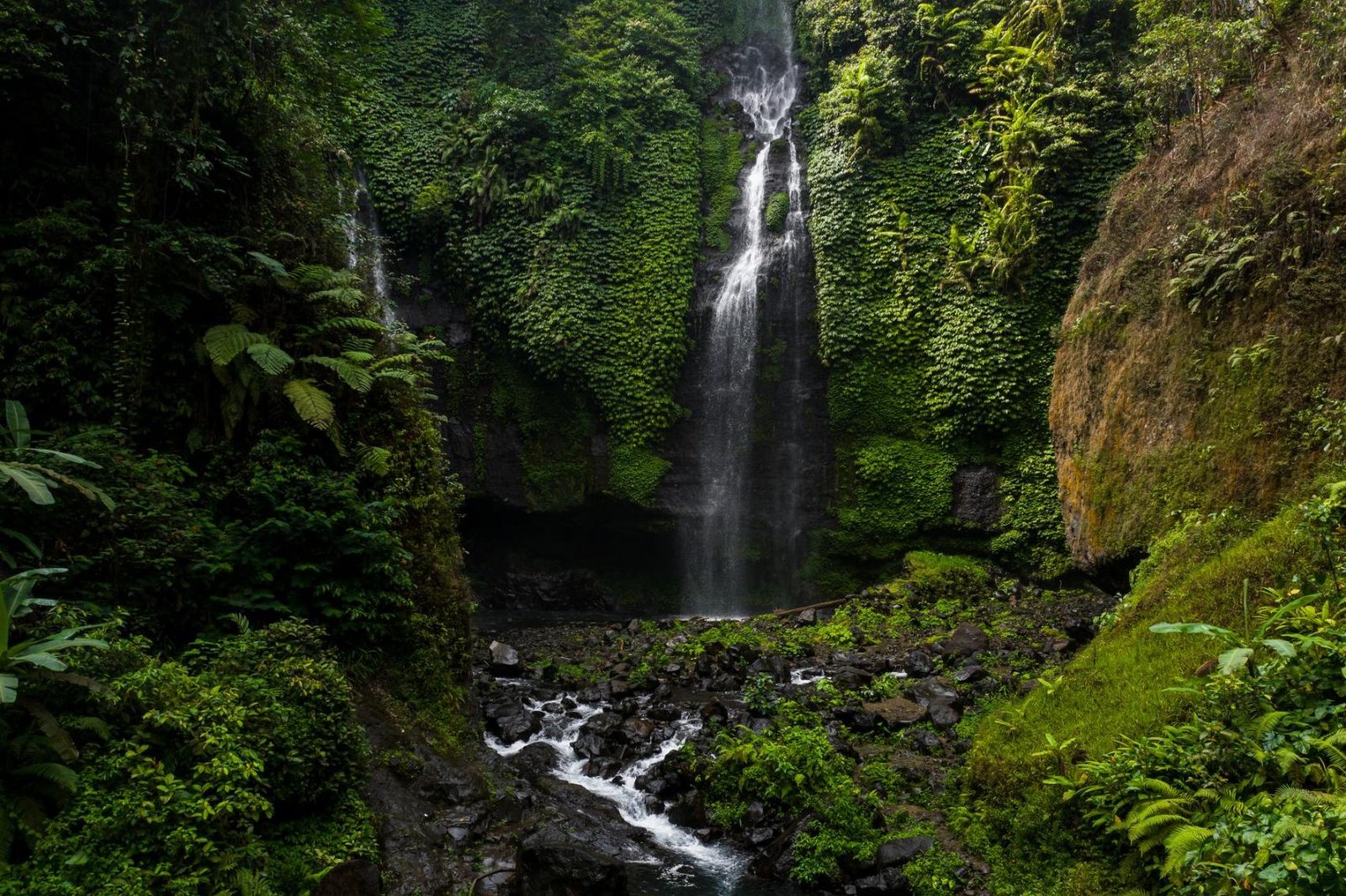
Cascatinha Taunay stands about 115 feet tall, gathering the waters of the Tijuca River, the Conde River, and other tributaries that flow down the mountain. It’s the tallest waterfall inside Tijuca National Park and also the easiest to visit: it’s near the entrance to the Floresta sector, with no long hike required.
The name comes from French painter Nicolas-Antoine Taunay, who settled there in 1817 and built a house nearby. Captivated by the landscape, he painted the waterfall in several canvases and began hosting the imperial court there — he became, in practice, the forest’s unofficial host. The house was demolished in 1946, but the waterfall’s name stuck.
In front of the cascade is a stone bridge in the shape of a Roman arch, built in 1860 by engineer Job de Alcântara at the request of the imperial government. It’s one of the most photographed spots in the park, with the water falling in the background and vegetation closing in on both sides.
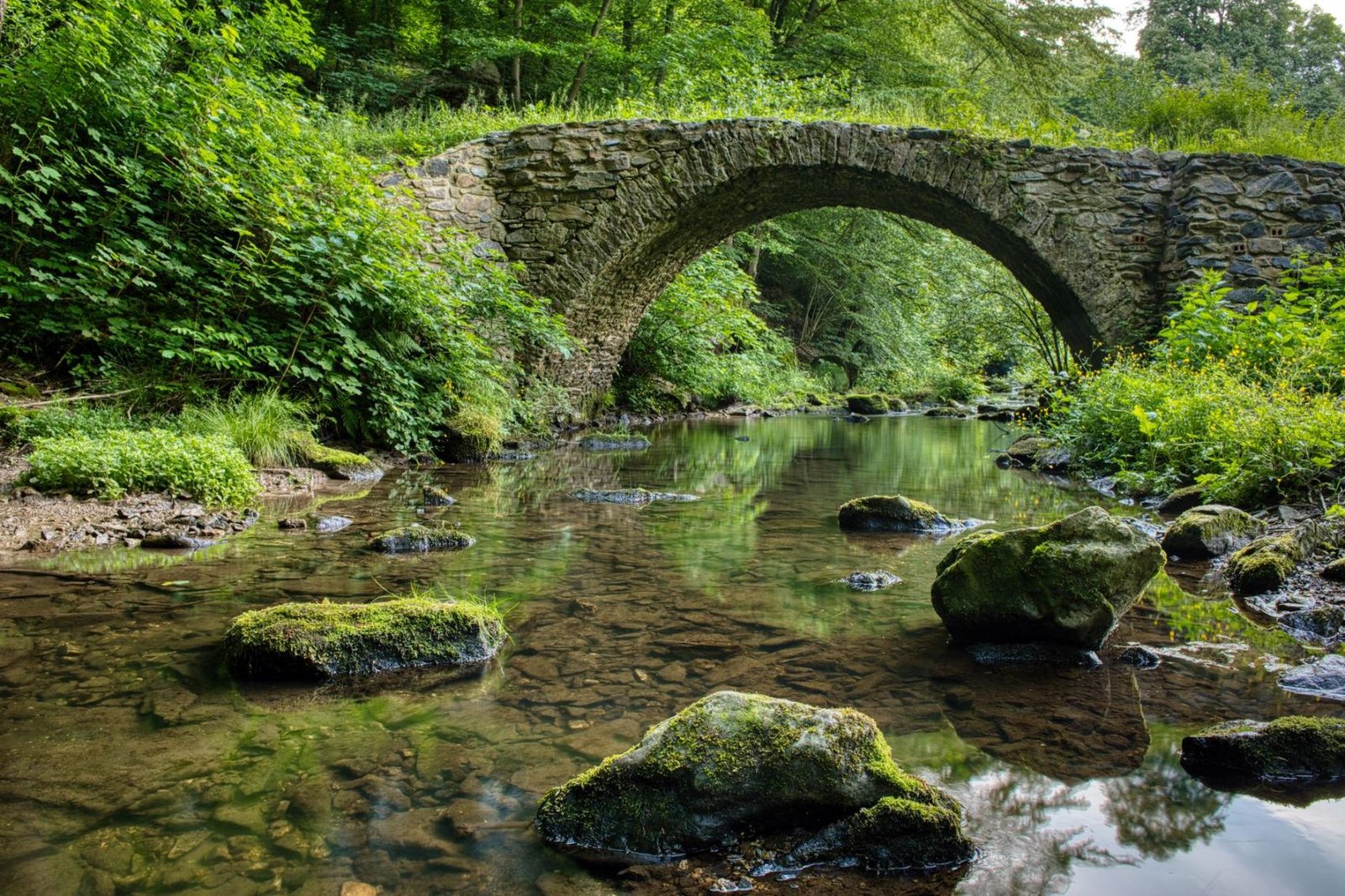
A straight-up warning: swimming under Cascatinha Taunay itself is not allowed. The drop is high, and the current forms pools that are too deep for safe bathing. If you want to get in the water, you need to walk a little further to the pool named after the engineer who built the bridge.
The Job de Alcântara Pool: Where You Can Actually Swim
Right below the Roman arch bridge is the Job de Alcântara pool, a natural swimming hole formed by the waters coming down from Cascatinha. This is where — and only here, in this specific area — swimming is allowed.
The water is cold even on the hottest days because it comes straight from the mountain and doesn’t spend enough time in the sun to warm up. The rocks around it get slippery when wet, so sandals with non-slip soles or water-friendly sneakers make a real difference — flip-flops tend to fly off on the first slanted rock.
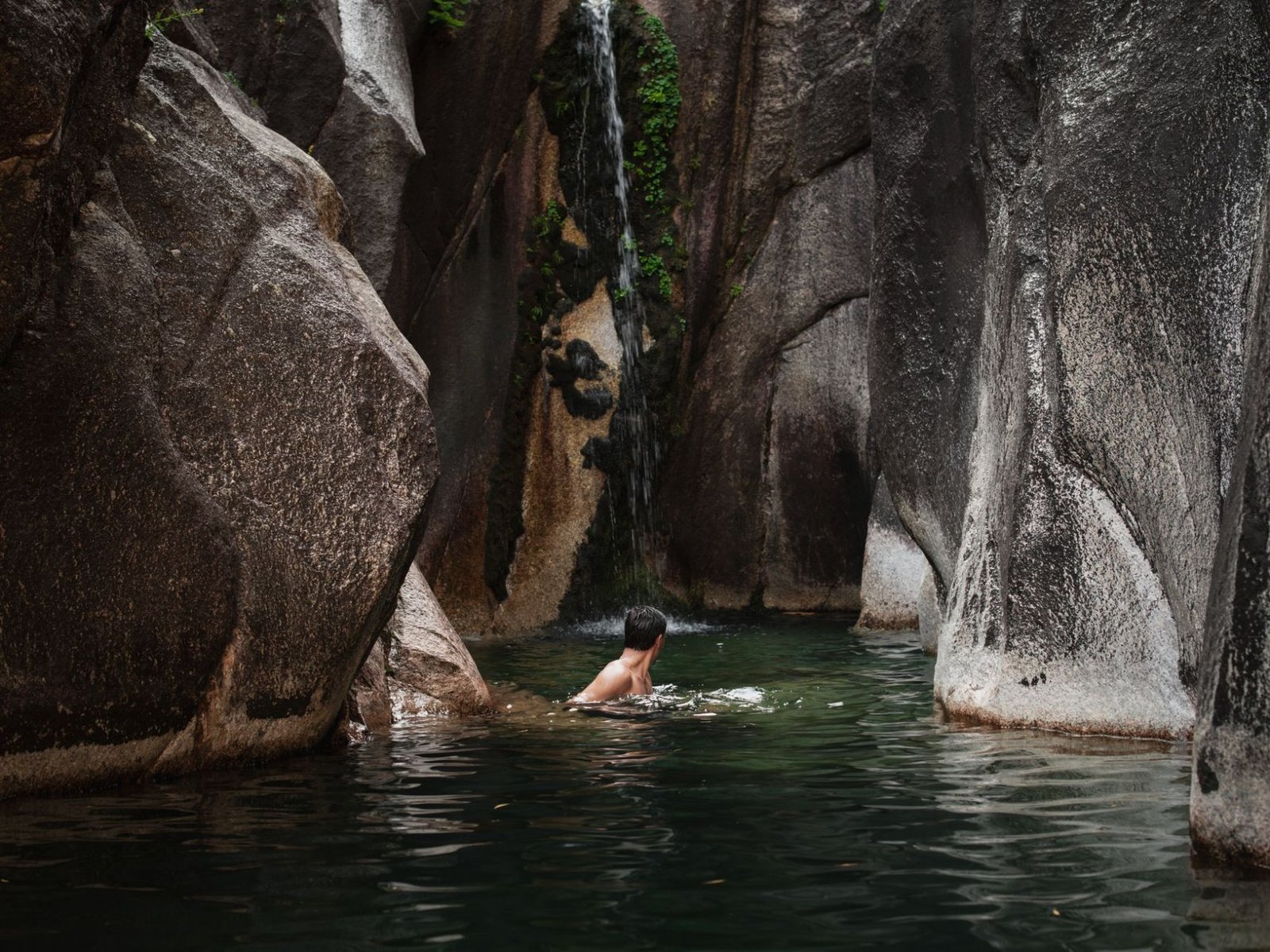
Avoid taking hygiene products into the water. Sunscreen, shampoo, and spray repellent contaminate a freshwater stream that supplies part of the forest’s wildlife. If you’re spending the day, apply sunscreen well before getting in and let it absorb into your skin.
The Horto Waterfalls: Quebra and Box
In a separate section of the park, in Horto, are two lesser-known falls: Cachoeira do Quebra and Cachoeira Box. The first has a shallow pool, great for those with kids or anyone who prefers to stand without worrying about depth. The second drops about 16 feet and forms a deeper pool, popular with people who like to jump off the rock.
The Horto area works as an alternative for those who’ve already visited Cascatinha Taunay on another occasion and want to explore a different corner of the same forest. Access is separate from the Floresta sector — it’s worth confirming the entry point and visiting conditions directly with the park administration before you go, since Horto has its own usage rules and may have restrictions at certain times.
How a Coffee Plantation Became the Forest You Visit Today
The detail few visitors know: the Tijuca Forest, which looks untouched, is actually planted. In the 19th century, the area was taken over by coffee plantations, and deforestation ended up compromising Rio de Janeiro’s water supply, which depended on the rivers that originate in the mountains.
In 1861, Emperor Dom Pedro II ordered the area to be replanted and put Major Manoel Gomes Archer in charge of the project. Over decades, native seedlings were planted one by one until the forest that now covers the park was restored — including the vegetation that feeds the rivers of the waterfalls you visit at Cascatinha Taunay and Horto. It’s considered one of the first major urban reforestation projects in the world, long before this type of project became common in other cities.
Cascatinha Taunay or Horto Waterfalls: Which to Choose First
If time is short, Cascatinha Taunay wins for practicality: it’s near the entrance, has the historic bridge for photos, and the Job de Alcântara pool is right next to it for those who want to get in the water. It’s the right choice for anyone combining the waterfall with another park spot on the same day, like Vista Chinesa or Mesa do Imperador.
Horto, on the other hand, pays off for those who already know Cascatinha and want a less crowded outing, or for those who prefer the shallow pool option at Cachoeira do Quebra with small children. Nothing stops you from visiting both areas on different days — they’re two distinct calling cards of the same forest, without overlapping.
How to Get to the Tijuca Forest
The Floresta sector — where Cascatinha Taunay is located — has its entrance at Praça Afonso Viseu, in Alto da Boa Vista. You can get there either from Barra da Tijuca and Itanhangá, via Estrada das Furnas, or from Tijuca, via Avenida Edson Passos.
By public transport, bus lines 301, 302, and 345 go up to Alto da Boa Vista. By car or ride-share, the route is straightforward to Praça Afonso Viseu, where the Floresta sector begins — Cascatinha appears just a few yards after the main gate, with no trail required.
The park is open daily from 8 a.m. to 5 p.m., when visitor support staff are on site. Outside this window, avoid entering: there’s no safety structure in place, and the forest gets much darker under the canopy, even during the day.
Safety Tips and What Not to Do
The park makes it clear in its visitor guidelines: falling rocks, insect or venomous animal bites, and sudden weather changes are part of the natural risk in any conservation unit. That’s no reason to cancel your outing, but it calls for extra caution on wet rock areas near the waterfalls.
- No speakers — noise pollution affects the forest’s wildlife.
- No portable grills outside the spots designated by the park.
- Don’t bring dogs or cats: they have no natural defense against forest diseases and parasites, and they can scare wild animals.
- In case of an accident, the number to call the Fire Department is 193.
- Take your trash with you — leftover food and packaging attract animals and contaminate the soil around the waterfalls.
Best Time to Visit
The Tijuca waterfalls get more water during the summer months, between December and March, when rains in the mountains are more frequent. That’s when Cascatinha Taunay is fullest and most beautiful to see — and also when the Job de Alcântara pool fills up faster after any heavy rain, so it’s worth checking the weather forecast before you leave home.
In winter, between June and August, the water volume drops significantly, but the advantage is lower visitor traffic and drier days for walking there. If your goal is a photo with the full cascade, prefer going after a recent rainy period. If you want to swim in peace, dry days leave the water cleaner and the pool less murky.
Frequently Asked Questions About the Tijuca Forest Waterfalls
Do I have to pay an entrance fee to see the waterfalls?
No. Tijuca National Park does not charge admission to visit the Forest, including Cascatinha Taunay and the Job de Alcântara pool. Separately hired guided tours have their own price, set by each operator.
Can I swim in Cascatinha Taunay?
Under the waterfall itself, no — it’s prohibited for safety reasons. Swimming is only allowed in the Job de Alcântara pool, just below the Roman arch stone bridge.
How long does it take to visit Cascatinha Taunay?
Since it’s near the entrance to the Floresta sector, a quick 30- to 40-minute stop is enough to see the cascade, cross the bridge, and, if you want, get in the pool. Those who want to enjoy the outing more usually set aside 1 to 2 hours, including a relaxed swim.
Can I go with children?
Yes, especially to Cascatinha Taunay and the Job de Alcântara pool, which are close to the entrance and have easy access. The Horto waterfalls also have a shallow option, Cachoeira do Quebra, which works well for families with small children.
Do I need a guide to visit the waterfalls?
It’s not mandatory for Cascatinha Taunay, which has easy and well-signed access. For those who want to better understand the forest’s history and wildlife, or plan to explore less obvious spots like Horto, hiring a local accredited guide is worth it.
Are the waterfalls full at any time of year?
No. The water volume varies quite a bit between the rainy summer and the drier winter. If the idea is to see Cascatinha Taunay at its maximum volume, the period from December to March usually delivers the best result, especially on days following a heavy rain in the mountains.
Is it worth booking a tour from Copacabana or Ipanema?
For those without a car who want a closed itinerary, yes — some agencies combine the Tijuca Forest with other park spots in a half-day trip. For those who prefer to go on their own, buses and ride-share apps get you to Praça Afonso Viseu without difficulty.
Getting to know the Tijuca Forest through its waterfalls changes the way you look at the rest of the park. The same forest that hides famous viewpoints also holds these corners of running water, and you can wrap up the outing by combining both in a single trip — without rushing, with time to sit on the rock and listen to the water for a moment before heading back to the city.