Rio de Janeiro is famous for its beaches, samba, and postcard-perfect landscapes. But the city also hides a food scene that goes far beyond the trendy restaurants of Ipanema. On the sidewalks, in neighborhood botecos, at street markets, and on beach kiosks, Rio reveals what it truly is: a city that eats well, without ceremony, with ice-cold draft beer and plenty of conversation.
This guide presents the most representative dishes and snacks of Rio de Janeiro’s typical cuisine — from the most famous (feijoada) to the most carioca of them all (the Biscoito Globo that the vendor sells on the sand). Here you’ll discover what to order, where to find it, and why each dish is part of the city’s identity.
Dica: Aproveite também para fazer estes passeios no Rio de Janeiro
Cristo Redentor de trem e tour pelo Rio de janeiro. Duração: 4 horas
Passeio grátis pelo centro histórico do Rio e Lapa. Duração: 3 horas
Free tour pelo bairro de Santa Teresa. Duração: 2h 30m
Amanhecer no mirante de Dona Marta + Cristo Redentor Duração: 4 horas
Veja todos os passeios e tranfers no Rio de Janeiro
The Carioca Table: What the City Eats Every Day
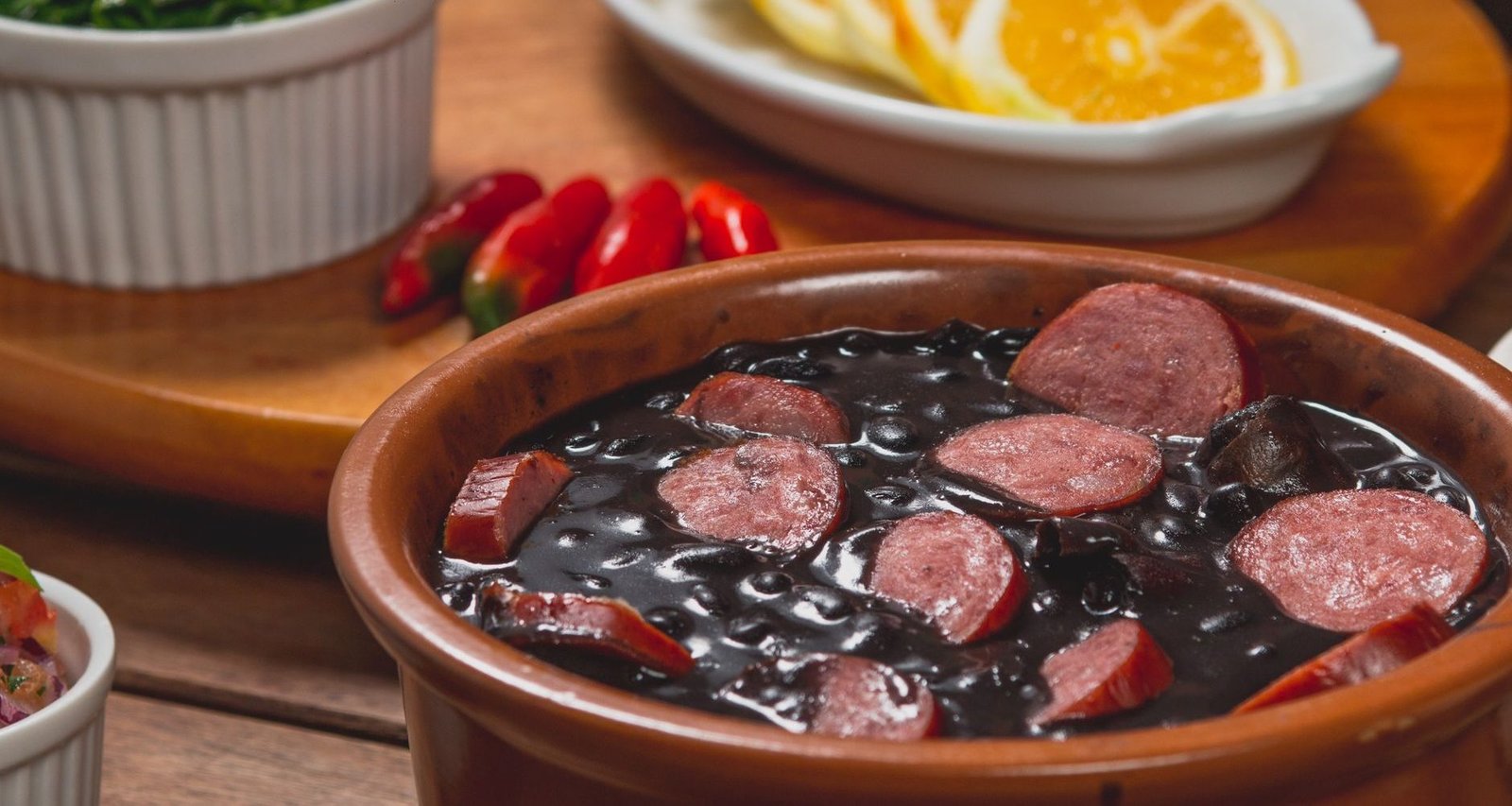
Before diving into the most famous dishes, it’s worth understanding the basics of daily carioca life. A typical lunch at a boteco or popular restaurant is straightforward: white rice, black beans, a protein (fried chicken, roast beef, or fish), farofa, sautéed collard greens, and sliced orange on the edge of the plate. Simple, but the combination works.
This combo is called a “prato feito” or “PF,” and for less than R$30 you can eat well in any neighborhood outside the touristy South Zone. At public markets and around Central do Brasil, the PF can be even cheaper.
Breakfast at the bakery-botecos has its own character: pão na chapa (a French roll split open and pressed on a hot griddle with butter), strong coffee with milk, and if you’re hungry, a coxinha or a bowl of bean soup. It’s quick, eaten standing up, and way more flavorful than the hotel buffet.
Biscoito Globo: The Snack Born on the Beach
There’s nothing more carioca than the Biscoito Globo. If you’re on Copacabana, Ipanema, or Leblon beach and hear someone shouting “Biscoito Globo, mate gelado!”, you know you’ve truly arrived in Rio.
The product has been made since 1953 by Indústria e Comércio de Biscoitos Globo in Bonsucesso. It comes in two versions: salty (the most famous) and sweet. The texture is strange on the first bite — crunchy, airy, slightly chewy — but it quickly becomes addictive. Biscoito Globo isn’t sold in regular supermarkets; only by beach vendors and at a few kiosks around the city.
A pack costs around R$6 to R$8 (prices may vary). Pair it with mate gelado — ice-cold, sweetened yerba mate tea sold by the same vendor — and you have the quintessential carioca snack. You can’t replicate this experience anywhere else in Brazil.
Carioca Feijoada: Understanding Rio in One Dish
Feijoada is a national dish, but Rio has a special relationship with it. The carioca tradition is to eat feijoada on Wednesdays and Saturdays. On those days, practically every boteco, neighborhood restaurant, and samba club puts the big pot on the stove.
The carioca version uses black beans and comes with rice, farofa, sautéed collard greens, sliced orange, and pork rinds. The mix of meats is generous: ear, trotter, tail, paio sausage, linguicinha, and carne seca are all part of the classic recipe.
Where to eat: Restaurante Aprazível (Santa Teresa) is famous for the full experience, but it’s pricey. For a more authentic and affordable feijoada, the traditional botecos of Leblon are the go-to — Jobi (Avenida Ataulfo de Paiva, 1166) and Bar Bracarense (Rua José Linhares, 85) are two of the most beloved. At both, Saturday feijoada with ice-cold draft beer is practically a religion.
Bolinho de Bacalhau and the Boteco Culture
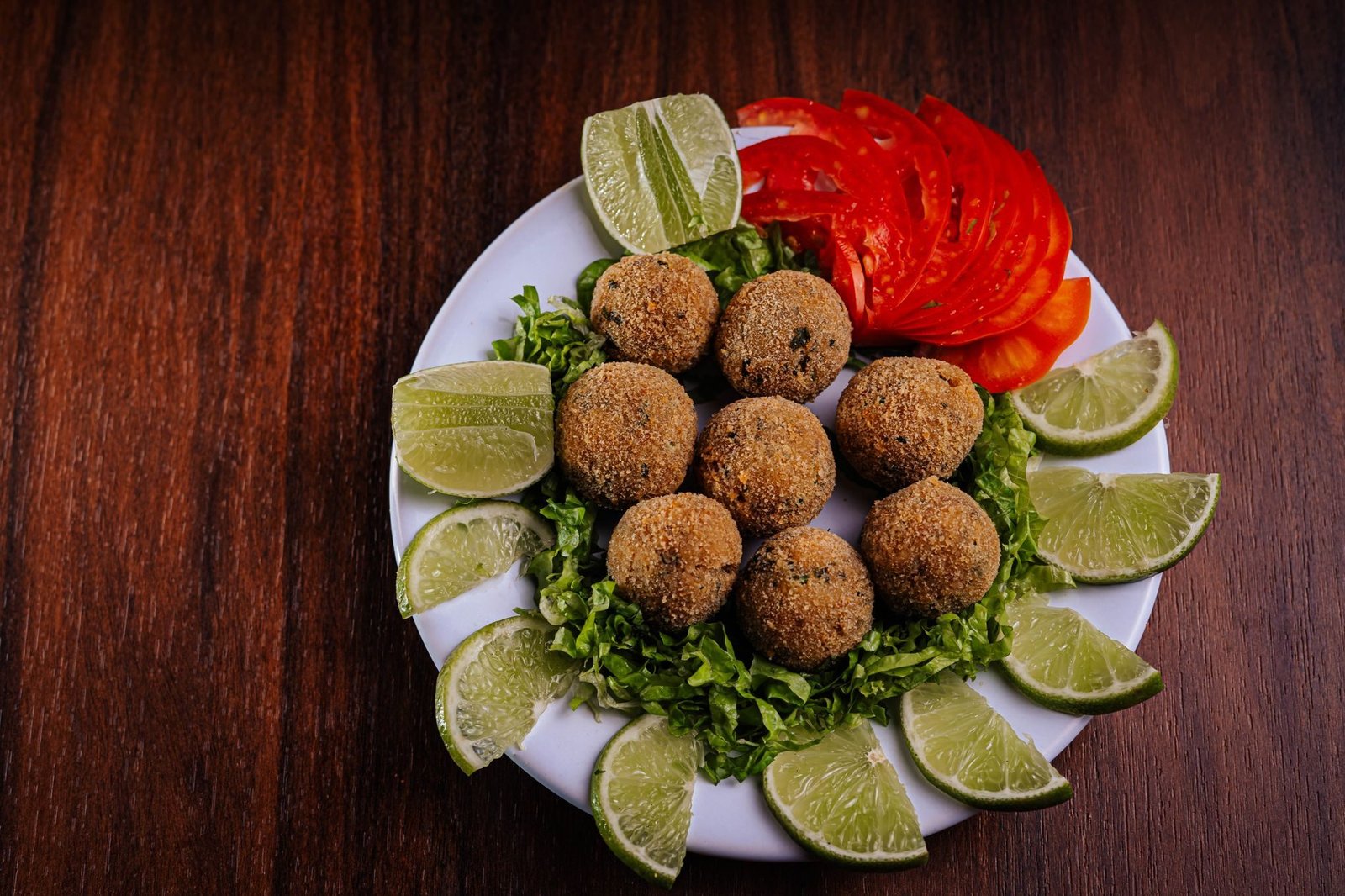
The bolinho de bacalhau (codfish fritter) is the most ordered snack in Rio’s botecos. Crispy on the outside, soft on the inside, made with shredded cod, potato, and seasonings. It always comes with a little salad of red onion and, of course, a well-pulled draft beer.
Its origin is Portuguese — Rio has a strong historical connection with Portugal since colonial times, and cod entered carioca cuisine through that path. Today, the bolinho de bacalhau is as carioca as samba. It appears as an appetizer in restaurants, a snack in botecos, and even at corner snack bars.
One of the most famous versions is at Bar Luiz, in Rio’s Centro (Rua da Carioca, 39), open since 1887. The place is one of the oldest in the city and keeps its menu almost unchanged: codfish fritters, linguicinha in wine, and draft beer in German-style glasses. It’s a visit that’s as historical as it is gastronomic. See more information on the Bar Luiz Wikipedia page.
Açaí in Rio: Very Different From What You Imagine
The açaí you eat in Rio doesn’t have much to do with the original from the Amazon, which is served thick, almost unsweetened, and mixed with fish or shrimp. In Rio, açaí is a dessert: cold, thick, sweetened with guaraná syrup, served in a large bowl, and topped with crunchy granola, sliced banana, condensed milk, and sometimes nuts.
It’s a caloric bomb that many people devour after coming out of the sea. The açaí kiosks scattered along Ipanema and Copacabana beaches sell everything from the simple version (açaí with granola and banana, around R$20 to R$35 depending on size) to elaborate combinations with tropical fruits and paçoca.
For a more artisanal, less industrialized açaí, look for it at neighborhood organic markets, especially the Botafogo market. There you’ll find producers who work with fresh fruit and fewer additives than the sidewalk franchises.
Tapioca, Kibe, and Street Snacks
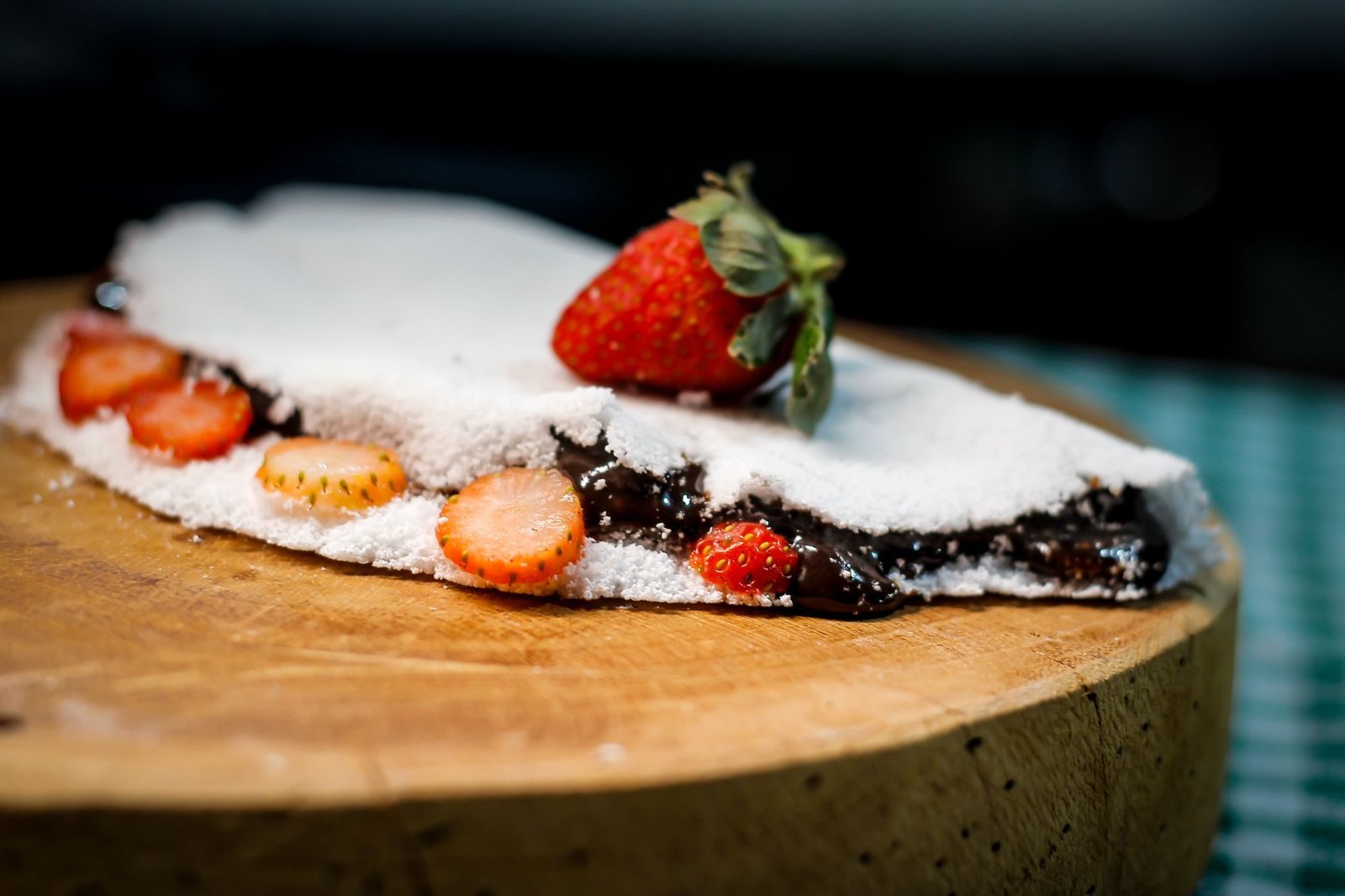
Tapioca came from the Northeast, but it has become a permanent fixture in carioca eating. Made fresh on a hot griddle, filled with cheese, shredded chicken, or cheese with guava paste, it’s quick, gluten-free, and found at markets, kiosks, and snack bars all over the city.
Fried kibe (or quibe) is also very present in Rio, a legacy of the Arab-Lebanese community that settled in Centro since the early 20th century. You’ll find kibe in bakeries, botecos, and markets. A good carioca kibe has a crispy shell and a filling seasoned with mint and spicy ground meat.
The filet mignon sandwich with pineapple at Cervantes (Avenida Prado Júnior, 335, in Copacabana) is an absolute classic. The place has been operating since 1955 and has become a pilgrimage point: the tender meat, the pineapple that balances the salt, the lightly toasted bread. It’s open until late and always has a line.
Where to Eat Typical Food in Rio: Botecos and Markets
The boteco is Rio’s most democratic gastronomic institution. Frequented by all social classes, it serves everyone from the worker stopping for a soup at lunchtime to the group that spends hours drinking and snacking. Quality varies a lot, but the classics are famous for a reason.
Some historic addresses:
- Bar Bracarense (Leblon) — One of the most popular botecos in the South Zone. Saturday feijoada, codfish fritters, and dried shrimp. Always packed.
- Jobi (Leblon) — Open since 1956, with always-cold draft beer and simple, well-made snacks. No-frills atmosphere.
- Bar do Mineiro (Santa Teresa) — Specializes in feijoada and tutu de feijão, with the charm of the historic neighborhood in the background.
- Bar Luiz (Centro) — The oldest in the city, over 135 years old. A menu that doesn’t change and a period atmosphere.
- Mercado Cobal do Humaiá (Humaiá) — Brings together restaurants, fishmongers, and grocery stores in a space with a green area. Open daily until night.
To try more than one thing at a time, the weekly street markets are a great bet. The Ipanema market (Thursday), the Glória market (Friday), and the Campo de Santana market bring together chicken skewers, pastéis, ice-cold sugarcane juice, and freshly made tapioca. Check the list of Rio’s markets on the City Hall website.
Drinks to Go With It: Draft Beer, Mate, and Caipirinha
It doesn’t make sense to talk about carioca food without mentioning the drinks. Draft beer — cold beer pulled straight from the keg — is practically inseparable from the boteco. Rio has an obsession with a well-pulled draft beer: cold glass, controlled foam, temperature between 0 and 2°C. Ordering a draft beer “at the right temperature” is a ritual taken seriously.

On the beach, mate gelado keeps everyone hydrated. It’s concentrated yerba mate tea, with plenty of sugar, sold ice-cold by vendors in plastic bottles. Bitter at first, addictive later. It always comes together with the Biscoito Globo.
The caipirinha — cachaça, lime, and sugar — is national, but Rio’s botecos usually make it fresh with artisanal cachaça, without using pre-made mixes. Some places offer versions with tropical fruits like passion fruit, pineapple, and cupuaçu.
Carioca Sweets and Desserts
Brigadeiro is associated with all of Brazil, but Rio has artisanal versions with quality cocoa and creative toppings. At markets and artisanal candy shops — Botafogo neighborhood concentrates a few — you’ll find gourmet brigadeiros for R$4 to R$8 each.
Quindim — made with egg yolk, shredded coconut, and sugar — is perhaps the most carioca sweet of all. It has an intense yellow color, a gelatinous texture, and a very sweet flavor. You’ll find it in traditional bakeries and confectioneries in Centro and Lapa.
Pé-de-moleque and cocada also appear frequently at markets, a legacy of the June festivals that has become a permanent street fixture. And in historic confectioneries, classic Portuguese sweets (pastel de nata, ambrosia) are made with recipes that haven’t changed in decades.
Practical Tips for Eating Well in Rio
Avoid restaurants with menus translated into several languages taped to the door — they usually have inflated prices and mediocre food. The best botecos usually have their menu on a blackboard, unhurried service, and a paper check.
Lunch between 11:30 AM and 1:00 PM is when any popular restaurant has everything fresh. After 2:00 PM, the pots have been scraped clean. On the beach, the Biscoito Globo is good at any hour, but the mate gelado goes best with strong sun — between 11:00 AM and 3:00 PM.
To spend less, the popular commercial centers of Centro (Rua da Carioca, Saara, around Central do Brasil) have excellent PF restaurants with prices you’ll hardly find in the South Zone. Rio has good food in every neighborhood — you don’t have to stick to the waterfront to eat well.
Always confirm opening hours directly with each establishment, as many adjust their service on holidays and during city events.
Frequently Asked Questions About Rio’s Typical Food
What is the most typical dish of Rio de Janeiro?
It depends on the context. In daily life, rice with black beans, collard greens, and farofa is the most consumed. For festivities, feijoada takes that spot. But the Biscoito Globo is the most uniquely carioca symbol — you simply won’t find it in any other city.
Where can I eat well in Rio without spending a lot?
In neighborhood botecos outside the touristy South Zone (Flamengo, Laranjeiras, Tijuca, Madureira) you can eat very well for R$20 to R$35. Public markets and weekly street markets are also great options. The Ipanema market on Thursdays is a great start for trying street food.
Is the açaí in Rio the same as in the Amazon?
No. Amazonian açaí is served thick and almost unsweetened, as a side dish for fish. In Rio, it’s a cold dessert, very sweetened, and topped with granola. Two completely different products with the same name.
Is it safe to eat at street stalls in Rio?
Generally yes, especially at registered markets and on beaches with identified vendors. Stalls near busy tourist spots usually have good food turnover. Prefer skewers that are being grilled on the spot, not ones sitting on the grill.
Is there any food from Rio that I can’t find in other cities?
The Biscoito Globo is the most extreme case — made in Bonsucesso and sold exclusively by vendors on Rio’s beaches. The artisanal mate gelado from the beaches is also a very carioca experience. And the Cervantes sandwich, with filet mignon and pineapple, has imitations but none equal to the original in Copacabana.
Eating well in Rio doesn’t require a reservation months in advance or a three-digit bill per person. The city’s best food is often on the sidewalk, at the boteco counter, or in the hands of the vendor walking by shouting on the sand.