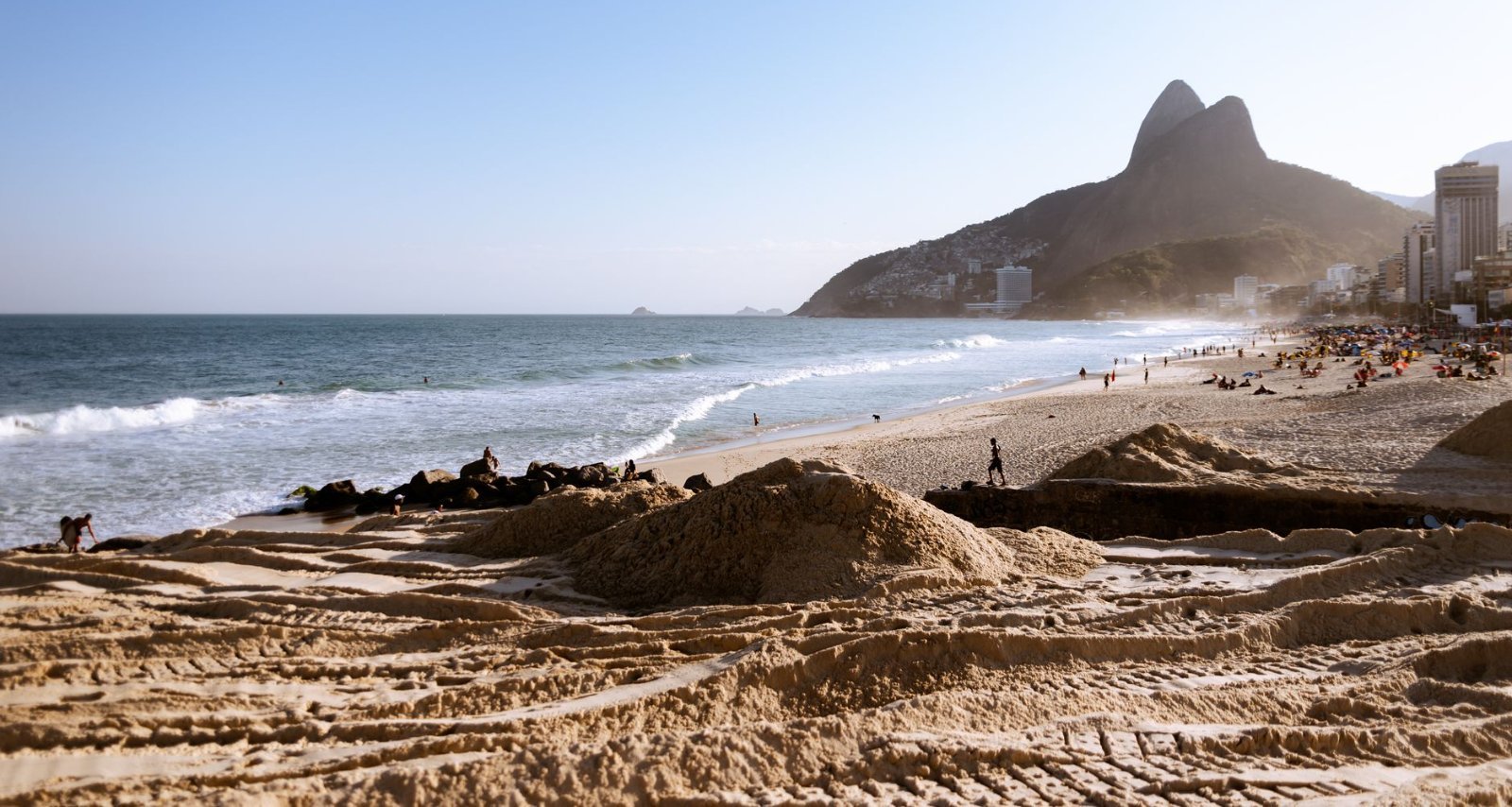
Two stone peaks rising side by side, the tallest reaching 533 meters, frame the landscape between Ipanema, Leblon, and the Rodrigo de Freitas Lagoon. This is Morro Dois Irmãos (Two Brothers Hill), and the trail to its summit has become one of the most sought-after excursions for visitors to Rio who want a view that costs nothing but the effort of the climb.
The access point is through the Vidigal favela, nestled between Leblon and São Conrado. The trail itself is short—just over 1 km of climbing—but the journey there and the precautions you take beforehand make all the difference in the experience. This guide rounds up everything you need to know before you lace up your sneakers.
Dica: Aproveite também para fazer estes passeios no Rio de Janeiro
Cristo Redentor de trem e tour pelo Rio de janeiro. Duração: 4 horas
Passeio grátis pelo centro histórico do Rio e Lapa. Duração: 3 horas
Free tour pelo bairro de Santa Teresa. Duração: 2h 30m
Amanhecer no mirante de Dona Marta + Cristo Redentor Duração: 4 horas
Veja todos os passeios e tranfers no Rio de Janeiro
How to get to the trailhead
The starting point is behind the soccer field at the Vila Olímpica do Vidigal, inside the community itself. The simplest way to get there is to take a mototaxi or a kombi van at the entrance of Vidigal—both charge a small fee for the ride up to the field, significantly cutting down the initial walk.
If you’re coming by public transport, get off at the Antero de Quental metro station and take a bus along Avenida Niemeyer to the Vidigal entrance, or catch a bus that covers this stretch directly from Ipanema or Leblon. Taxis and ride-sharing apps will also drop you at the community entrance, where a mototaxi takes over for the rest of the climb.
At the Vidigal entrance, the Residents’ Association usually charges a small access fee for the trail, and the mototaxi or van ride to the soccer field is a separate cost. Prices change from time to time, so it’s always a good idea to confirm the current rate with whoever is at the entrance on the day of your visit.
The trail: duration, difficulty, and route
From the soccer field to the top, it’s about 1.3 km, which takes a little over 30 to 50 minutes of climbing, depending on your fitness level and pace. The overall difficulty is light to moderate—it doesn’t require prior hiking experience, but it’s not a completely flat walk either.
The path cuts through a stretch of Atlantic Forest, partly reforested, with shade covering most of the route. At some points, the trail forks; the advice from those who’ve done it is simple: when in doubt, take the more open and well-trodden path, usually the one on the left. After heavy rain, the ground gets slippery, and the climb requires more careful footing.

Why are they called the “Two Brothers”?
The name comes from the resemblance between the two rocks, standing side by side almost like twins watching over the sea. Geologically, they are part of the same set of rock outcrops that includes Pedra da Gávea and Sugarloaf Mountain—granite and gneiss formations sculpted over millions of years by erosion, characteristic of Rio’s landscape.
Before the urban occupation of the South Zone, the two rocks served as a reference for boats approaching the city from the sea. Today, beyond their scenic value, the vegetation covering the slopes is part of one of the last fragments of original Atlantic Forest still preserved within Rio’s urban perimeter, which reinforces the importance of staying on the marked trail.
Is it worth hiring a guide?
It’s not mandatory, but hiring an agency or a local guide significantly reduces the risk for anyone who has never done the trail. Companies that operate the tour usually require a safety registration before the climb and provide personal accident insurance during the route—which offers peace of mind for those visiting the city for the first time.
Those who prefer to save money and already have experience with urban hikes often go up on their own, without a guide, since the path is well-marked and has plenty of traffic for most of the day. Even so, avoid going completely alone—meeting other people on the climb, whether on your own or in an organized group, is always safer than tackling the trail in isolation.
For safety reasons, the hike is usually canceled on days of heavy rain, as the mud makes the path dangerous. If you hire an agency, ask in advance about their rescheduling or refund policy in case of rain.
Best time to hike
Sunrise is the most sought-after time, and it’s no exaggeration: watching the day break over Ipanema and the lagoon, with the city still quiet below, is unlike any other moment of the day. This means starting the climb while it’s still dark, so arrange your transport to Vidigal in advance if you choose this time.
For those who prefer not to get up early, late afternoon is also rewarding, with softer light hitting the city before sunset. Avoid midday: the heat makes the climb much more tiring, especially in the summer months, and the direct light tends to blow out photos from the top.

The view from the top
From the top, the Rodrigo de Freitas Lagoon appears surrounded by the buildings of Leblon and Gávea, with Christ the Redeemer visible in the distance on clear days. On the other side, the sandy strip of São Conrado leads the eye to Pedra da Gávea, with its vertical face facing the sea.
Ipanema and Leblon stretch out in a straight line below, separated by the Jardim de Alah canal, while Vidigal occupies the slope between the trail and the beach. It’s one of the few views of Rio where you can simultaneously see beach, lagoon, favela, and mountain—a pretty literal summary of the geography that makes the city so unique.

Dois Irmãos or other South Zone trails?
Those who have already done the Dois Irmãos trail and want to keep exploring urban hikes in Rio often compare it to Pedra Bonita and Pedra da Gávea, both further away in the Barra da Tijuca and São Conrado areas. Pedra Bonita has a shorter, less technical climb, similar in effort to Dois Irmãos, while Pedra da Gávea requires much more physical preparation and, in some sections, the use of a rope.
For those in the city for just a few days and wanting only one urban hike with a good effort-to-view ratio, Dois Irmãos is usually the most common recommendation among locals: it’s close to the South Zone, has relatively simple access, and delivers one of the most complete views of the city without requiring the fitness level of the longer climbs.
What to pack in your backpack
Sneakers with good grip make a real difference on this climb—sandals and flip-flops make the final stretch riskier, especially if the ground is damp. Bring plenty of water, as there are no vendors along the way, and Rio’s heat dehydrates you quickly even on short climbs.
Sunscreen, a cap or hat, and light clothing round out the basic list. If you’re planning to see the sunrise, it’s worth bringing a light jacket: the temperature at the top, hit by the wind, is usually cooler than on the beach. Carry a little cash to cover the access fee and the mototaxi, as not every spot at the Vidigal entrance accepts cards.
Frequently asked questions about the Dois Irmãos Trail
Is the Dois Irmãos trail dangerous?
For those with basic physical fitness who stick to the marked path, the risk is low. The main precautions are the slippery ground after rain and the recommendation not to hike completely alone.
How long does it take to go up and down?
The climb usually takes between 30 and 50 minutes, and the descent is a bit faster. Counting the time at the top to enjoy the view, set aside 1.5 to 2.5 hours for the complete hike, not including travel to Vidigal.
Do you have to pay to do the trail?
Yes, there is usually an access fee charged by the Vidigal Residents’ Association, plus the cost of the mototaxi or van to the start of the route. The amounts are typically low, but confirm on-site, as they can change.
Can children do the trail?
Older children used to walking usually manage, but the uneven ground in some sections requires extra attention with the little ones. For very young children, the climb can be more challenging than it first appears—it’s worth assessing your family’s pace before deciding on the sunrise time, which requires walking in the dark to the trailhead.
What’s the difference between doing the trail with a guide or on your own?
With a guide, you get professional support, accident insurance, and less chance of getting lost at the forks. On your own, you save more money, but the responsibility for safety and navigation is entirely yours.
Can you do the trail at night?
It’s not recommended. With no lighting on the route, the risk of tripping and getting lost at the forks increases significantly after sunset. Those who want to see the city lit up from above usually prefer viewpoints accessible by road, like Mirante Dona Marta, leaving Dois Irmãos for the early hours of the day.
The Dois Irmãos trail sums up what makes Rio such a unique destination: to see one of the city’s most beautiful views, you first pass through a real community, with its own life and economy, before reaching the top of the rock. It’s worth contacting local agencies or the Vidigal residents’ association to confirm access conditions before planning your climb—and, since you’re in the area, take the chance to explore more of Ipanema Beach, which lies right at the foot of the hill.
For more information on the protected Atlantic Forest in the region and the geological history of the two rocks, the Wikipedia page for Dois Irmãos Hill offers a good summary. Before heading up, also check the weather conditions on the Alerta Rio website, which monitors rainfall in the city, and consult the Riotur website for other tourist information about the South Zone.